

Fungus Gnats in Coastal Southeastern North Carolina
Fungus gnats are the small dark flies that emerge from houseplants and hover around windows and lights. They look a bit like very small mosquitoes (without the bite), and they almost always trace back to a single cause: overwatered potting soil. If you have multiple houseplants in coastal NC’s humid climate, you’ve probably had fungus gnats at some point.
The good news is they’re harmless to people, pets, and (usually) plants. The bad news is they multiply fast in damp soil and spread between plants quickly. A single overwatered planter can produce gnats that emerge into your home for weeks.
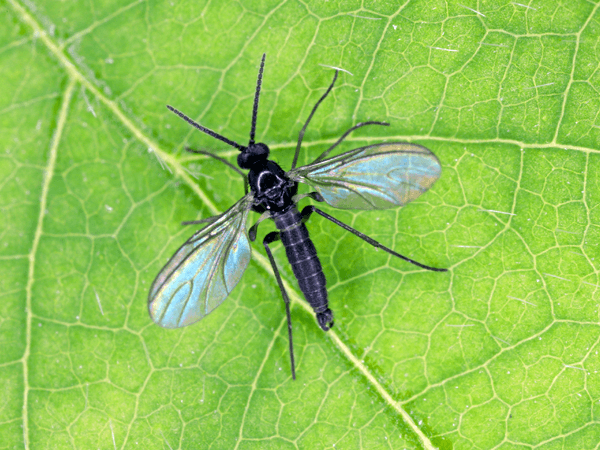
Quick Identification
- Size: About 1/16 to 1/8 inch (small, smaller than fruit flies)
- Color: Dark gray to black
- Distinguishing features: Slim mosquito-like build; long legs; long thin wings; weak erratic flight
- Behavior: Hovers around plants, soil, windows, and lights; doesn't bite; emerges in larger numbers after watering
How They're Different from Fruit Flies
Fungus gnats and fruit flies look similar briefly, but behave differently:
- Body shape: Fungus gnats are slimmer with longer legs; fruit flies are more compact and chubbier
- Color: Fungus gnats are darker (nearly black); fruit flies are tan or brown
- Eyes: Fruit flies have prominent red eyes; fungus gnat eyes are small and dark
- Location: Fungus gnats hang around plants; fruit flies hang around fruit, drains, and recycling
- Source: Fungus gnats come from soil; fruit flies come from organic residue (drains, fruit, garbage)
If you see this running behavior, take it seriously. Phorid flies almost always indicate an underlying issue that needs investigation.
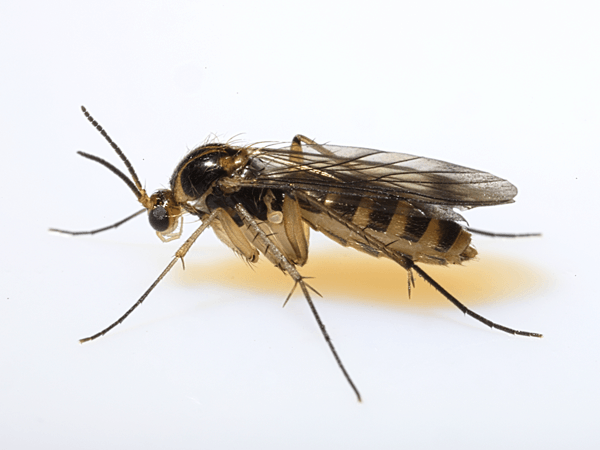
Where Fungus Gnats Come From
Fungus gnat larvae develop in damp organic matter, almost always in plant soil:
- Overwatered houseplants (the primary source in coastal NC homes)
- Recently purchased plants that arrived with gnats already established
- Outdoor potted plants brought inside
- Damp soil in plant saucers that stays wet between waterings
- Self-watering planters with persistent moisture
- Mulch left damp around indoor plants
- Rarely: moist organic material in drains, sumps, or HVAC condensate trays
A single overwatered pot can produce 200 gnats per week. With multiple plants, populations build fast.
Signs of an Infestation
- Small dark flies hovering around potted plants
- Flies emerging from soil when you water (the disturbance brings them up)
- Flies clustering at windows near plants
- Tiny white worms in the top inch of soil (the larvae)
- Flies aggregating around lamps and ceiling lights at night
- Increase after watering plants
Why They Matter
- Plant health: Larvae generally feed on fungus and decaying material but can damage seedlings and young roots in heavy populations
- Spread between plants: Adults move easily between houseplants, spreading the issue
- Visual nuisance: Hovering flies near plants and windows are persistent and unpleasant
- Misdiagnosis: Often confused with fruit flies or drain flies; the wrong treatment doesn't work
- Indicator of overwatering: Their presence often signals you're killing your plants with kindness
How Healthy Home Treats Fungus Gnats
Fungus gnat control combines adult knockdown with addressing the soil source. Healthy Home covers fungus gnats under every protection plan.
- Inspection to identify which plants are the source
- Adult fly knockdown with targeted application in resting areas
- Soil treatment with appropriate products (often a biological larvicide like BTI granules)
- Watering guidance for the homeowner; the single most effective long-term fix
- Quarterly maintenance to catch new introductions early
How to Prevent Fungus Gnats
- Let the top inch of soil dry out between waterings
- Empty saucers under pots; don't let plants sit in standing water
- Inspect new plants for gnats before bringing them inside
- Quarantine new plants for 2 weeks before placing them near existing houseplants
- Use sterile potting mix when repotting; avoid garden soil indoors
- Top-dress pots with a 1/2-inch layer of sand or fine gravel (makes egg-laying difficult)
- Sticky yellow traps near plants catch adults and monitor for activity
Covered Under:
- Home + Yard Protection ($935/year)
- Home + Mosquito Protection ($1,250/year)
- Ultimate Protection Plan ($1,545/year)
- Essential Home Protection (does not include yard treatment)
Frequently Asked Questions
Almost always yes. Fungus gnat larvae develop in damp soil, especially overwatered potting mix. They feed on fungal growth and decaying plant matter in the soil. Drying out the soil between waterings is usually the most effective single intervention.
Fungus gnats are darker (almost black), slimmer, and have longer legs that make them look spider-like in flight. Fruit flies are tan or brown with bright red eyes and a more compact body. Fungus gnats hang around plants; fruit flies hang around fruit, drains, and recycling.
Yes, under every protection plan. Treatment combines adult fly knockdown, soil treatment with appropriate products, and guidance on watering to prevent recurrence.
Usually, no. Adult fungus gnats don’t damage plants. Larvae mostly eat fungus and decaying matter in soil. In heavy infestations, larvae can damage delicate seedlings and young roots, but established houseplants are rarely killed by fungus gnats.
No, in most cases. Treatment is straightforward: let the soil dry out, treat with appropriate products, and adjust watering. Throwing out an otherwise healthy plant is unnecessary.