

Clothes Moths in Coastal Southeastern North Carolina
Clothes moths are the reason your favorite wool sweater has unexplained small holes in it. Unlike the moths you see flying around outdoor lights, clothes moths actively hide from light, prefer dark closets and storage areas, and target natural fibers as food. The adults you occasionally spot are not the ones doing the damage; their larvae are.
Coastal NC’s humidity and year-round mild temperatures make this region especially friendly to clothes moths. Once they establish in a closet, they can quietly chew through a season’s worth of wool and silk before you ever notice.
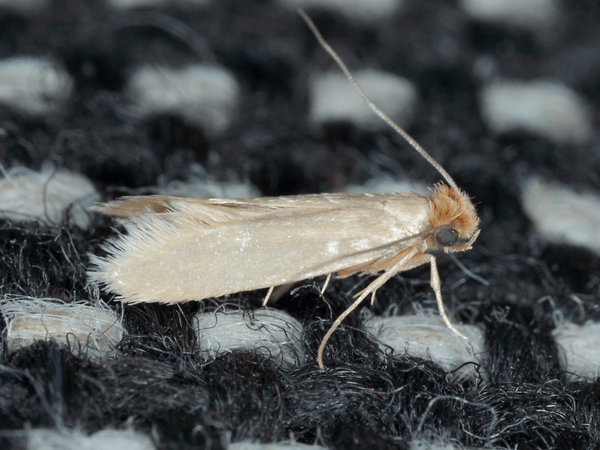
Quick Identification
- Adult Size: About 1/4 inch long; wingspan up to 1/2 inch
- Color: Pale buff to golden tan; uniform color with no obvious markings
- Distinguishing features: Avoids light (unlike pantry moths and outdoor moths); flies in short bursts and quickly hides
- Larvae: Small white caterpillars up to 1/2 inch long; often hidden inside silken tubes or cases on fabric
Two Common Species in Coastal NC
Webbing Clothes Moth
The more common species. Larvae spin silken webbing or tunnels directly on the fabric they’re feeding on. Often found in undisturbed wool clothing, blankets, and rugs.
Case-Making Clothes Moth
Less common but distinctive. Larvae build small portable cases out of fabric fibers and carry them around as they feed. The cases look like tiny grains of rice attached to the fabric.
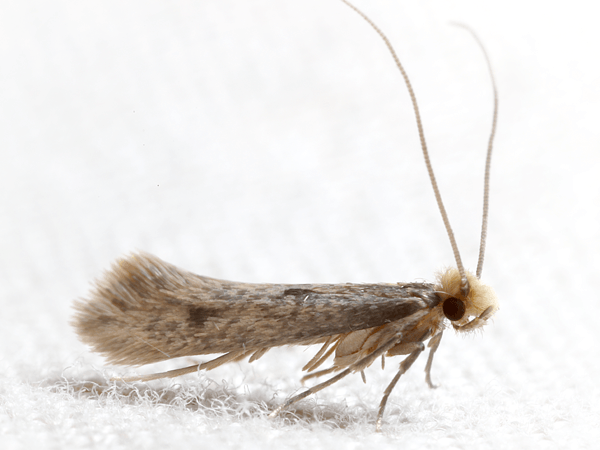
Where You Find Them in Coastal NC
Clothes moths target undisturbed natural fibers in dark, warm, humid environments:
- Wool, cashmere, and silk clothing stored long-term
- Wool blankets, rugs, and tapestries
- Fur coats and stoles
- Felted wool items, like hats and decorative pieces
- Upholstery and pet bedding made with natural fibers
- Stored items in attics, basements, and rarely-opened closets
They are especially attracted to fabrics with body oil, sweat, food stains, or pet hair, which provide additional nutrients for the larvae. Clean items stored in tightly sealed containers are much less likely to be damaged.
Signs of an Infestation
- Small, irregular holes in wool, silk, or other natural-fiber clothing
- Silken webbing or threads on fabric surfaces
- Tiny portable cases that look like grains of rice attached to fabric
- Small pale moths fluttering out of closets when disturbed
- Loose fibers, scaled debris (frass), or shed larval skins on shelves or in folds of fabric
- Damage concentrated in dark, less-disturbed areas of the closet
Why They Matter
Clothes moths cause financial and sentimental damage:
- Expensive clothing: Wool and silk garments, cashmere, and tailored suits can be ruined by larvae
- Heirloom items: Wool blankets, rugs, and family textiles often hold sentimental value beyond replacement cost
- Spread within the closet: Infestations expand to nearby fabrics, multiplying damage over months
- Re-infestation risk: Without source elimination, new larvae continue developing on hidden fabric pieces, fur particles, or pet hair caught in corners
How Healthy Home Treats Clothes Moths
Clothes moth treatment combines professional service with closet hygiene. Healthy Home covers clothes moths under every protection plan.
Treatment includes:
- Inspection of closets, attics, and storage areas to identify the source
- Targeted application in closet corners, shelf edges, and cracks where larvae and pupae hide
- Perimeter treatment in adjacent rooms to prevent spread
- Quarterly maintenance to break the moth life cycle and prevent new generations
Homeowner action is required to fully resolve an infestation: heavily damaged items often need to be discarded, recoverable items must be laundered or dry-cleaned (or frozen at 0°F for 4 days), and storage areas should be vacuumed thoroughly before treatment.
How to Prevent Clothes Moths
- Clean wool and silk before long-term storage (larvae feed on body oils and sweat residue)
- Store seasonal items in airtight bins, garment bags, or cedar chests
- Vacuum closets, drawers, and under furniture quarterly to remove eggs and larvae
- Use cedar or lavender sachets (mildly repellent, not a primary defense)
- Inspect second-hand wool and silk before bringing items home
- Rotate clothing regularly; moths avoid frequently-disturbed items
Covered Under:
- Home + Yard Protection ($935/year)
- Home + Mosquito Protection ($1,250/year)
- Ultimate Protection Plan ($1,545/year)
- Essential Home Protection (does not include yard treatment)
Frequently Asked Questions
No. They look similar at a glance but target completely different food sources. Clothes moths eat natural fibers like wool, silk, and fur. Pantry moths eat stored grains, flour, and dried foods.
No. The adult moths you see flying don’t damage anything. The larvae do all the damage, and they hide in closets, under furniture, and in dark corners. Killing adults without addressing the larvae just lets the cycle continue.
Yes. Clothes moths are covered under every protection plan. Severe infestations may also require closet cleanout and laundering or freezing of infested items.
Traditional mothballs (naphthalene or paradichlorobenzene) can be effective in tightly sealed containers but are toxic to people and pets in living spaces. We don’t recommend them for active-use closets. Cedar and lavender are mild repellents but not strong enough to stop an established infestation.
Not directly. Clothes moth larvae need keratin (the protein in wool, silk, fur, and feathers) to develop. Synthetic fabrics like polyester and nylon are safe. However, blended fabrics (wool-polyester, for example) can still be damaged in the wool fibers.