

Roof Rat in Coastal Southeastern North Carolina
Roof rats are the sleek, agile climbers of the rat world. They live in trees, vines, attics, and along roof lines, almost never on the ground if they can avoid it. In coastal NC, they’re common in older neighborhoods with mature trees, in homes near water, and in areas with heavy vegetation along the foundation.
The classic roof rat experience is hearing scratching or running sounds in the attic at night, sometimes for weeks, before figuring out what’s there. Because they enter at the roof line rather than at ground level, the entry points are often invisible from the yard.
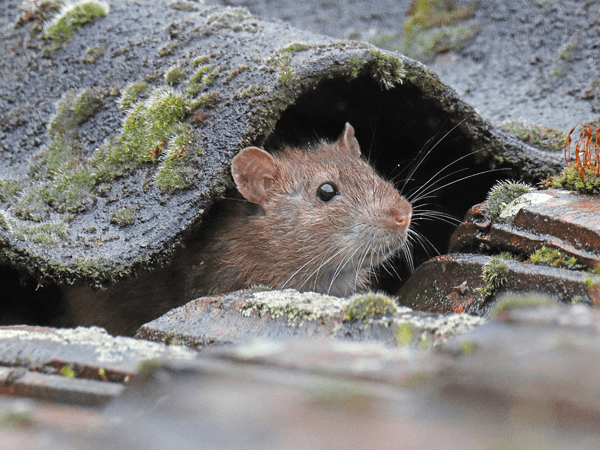
Quick Identification
- Body length: 6 to 8 inches (not counting tail)
- Tail length: 7 to 10 inches (longer than body)
- Weight: 5 to 9 ounces (lighter than Norway rats)
- Color: Dark brown to nearly black above; lighter gray below
- Distinguishing features: Pointed snout, large prominent ears, sleek body, long thin tail; excellent climbers
How to Tell Roof Rat from Norway Rat
- Body shape: Roof rats are sleek and slender; Norway rats are heavy and stocky
- Tail: Roof tail is longer than body; Norway tail is shorter than body
- Snout: Roof is pointed; Norway is blunt
- Habitat: : Roof rats climb and live in attics, trees, and high spaces; Norway rats live at ground level (burrows, crawl spaces)
- Droppings: Roof droppings are smaller (about 1/2 inch) with pointed ends; Norway droppings are larger with blunt ends
Adult moths emerge from packages, fly throughout the kitchen, and lay eggs on nearby food sources, expanding the infestation rapidly.
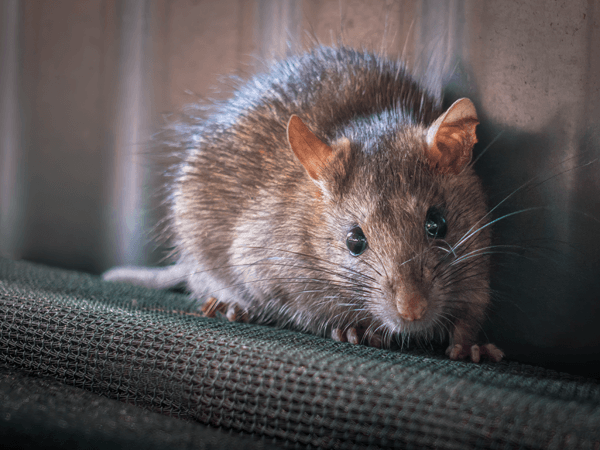
Where You Find Them in Coastal NC
Roof rats prefer elevated spaces and rarely come down to ground level if alternatives exist:
- Attics, especially around insulation and stored items
- Inside soffits, gable vents, and roof returns
- Tree canopies (oaks, palms, magnolias) connected to rooflines by branches
- Ivy, dense vines, and overgrown vegetation reaching the home
- Utility wires and cable lines leading to the home
- Garages, sheds, and outbuildings with rooflines they can reach
- Citrus and fruit trees (a strong attractant for foraging)
Coastal NC homes with mature tree canopies, heavy foundation plantings, or wooded lots are particularly vulnerable.
Signs of an Infestation
- Scratching/running noises in the attic at night: The most common first sign
- Droppings: Smaller, pointed-end pellets (about 1/2 inch) in attics, on rafters, or on top of insulation
- Gnaw marks: On wooden trim, soffits, gable vents, or rooflines
- Grease marks: Dark smudges along roof returns, soffit corners, or where rats squeeze through gaps
- Damaged fruit: Bitten or partially-eaten fruit on citrus or fruit trees
- Nesting material: Shredded insulation, leaves, or fabric piled in attic corners
- Tracks on utility wires: Dust or marks along wires and cables leading to the house
Why They Matter
- Disease transmission: Carriers of salmonella, leptospirosis, rat-bite fever, hantavirus, and other pathogens
- Insulation damage: Roof rats shred attic insulation extensively, reducing its R-value and creating contamination hazards
- Electrical wire damage: Gnawing on attic wiring is a documented house fire risk
- Population growth: A female roof rat produces 3 to 5 litters per year with 5 to 8 young per litter
- Secondary mite problems: Tropical rat mites that live on roof rats often start biting humans when the rats die or are removed
- Quiet entry pattern: Roof rats often establish in attics undetected for months before they're discovered
How Healthy Home Removes Roof Rats
Roof rat removal focuses on attics, roof lines, and the climbing pathways that brought them in. Trapping ground-level alone never solves a roof rat problem.
- Attic inspection to confirm activity, locate nesting areas, and identify entry points
- Trapping in attic spaces using methods appropriate for elevated trapping locations
- Exclusion by sealing gaps in soffits, gable vents, plumbing vent stacks, chimney flashing, and other roof-line entries
- Habitat modification guidance: trimming tree branches back at least 6 feet from the roofline, removing ivy and dense foundation plantings, and clearing fruit from accessible trees
- Insulation assessment after removal: heavily contaminated insulation often needs replacement
- Ongoing monitoring to catch new activity early
How to Prevent Roof Rats
- Trim tree branches back at least 6 feet from the roof line
- Remove ivy and dense vines climbing the home
- Install metal screens on gable vents and roof vents
- Seal gaps around soffits, plumbing vent stacks, chimney flashing, and roof returns
- Pick up fallen fruit from citrus and fruit trees regularly
- Store pet food and birdseed in sealed containers
- Inspect roof lines annually for new gaps, especially after storms
Covered Under:
- Home + Yard Protection ($935/year)
- Home + Mosquito Protection ($1,250/year)
- Ultimate Protection Plan ($1,545/year)
- Essential Home Protection (does not include yard treatment)
Frequently Asked Questions
Both make noise in attics, but they sound different. Squirrels are active during daylight and make running and bounding sounds. Roof rats are nocturnal and make scratching, gnawing, and scampering sounds at night. Squirrel droppings are larger and more rounded than rat droppings.
By climbing. They use tree branches, utility wires, vines, and rough siding to reach the roof, then enter through gaps in soffits, gable vents, damaged shingles, plumbing vent stacks, or chimney flashing. Sealing roof-line entry points is essential to long-term control.
Yes, under the Ultimate Protection Plan. Treatment includes attic inspection, trapping, exclusion of roof-line entry points, and ongoing monitoring.
No. New rats will find the same entry points within weeks. Effective control requires trapping, exclusion (sealing entry points), and habitat modification (trimming trees, removing climbing pathways).
Sometimes. Heavily contaminated insulation often needs replacement, especially when there’s significant urine, droppings, or nesting material. Light contamination can sometimes be sanitized in place. We’ll assess this during inspection and provide a recommendation.