

Red Imported Fire Ants in Coastal Southeastern North Carolina
The Red Imported Fire Ant (RIFA) is the fire ant in coastal southeastern North Carolina.
If you’ve stepped on a mound in your yard, watched ants pour out by the hundreds, or felt that signature burning sting, you’ve met this species.
Native to South America and accidentally introduced to the U.S. through the port of Mobile, Alabama in the 1930s, RIFA has spread across the Southeast and now defines warm-season ant problems in our region.
This page covers what they look like, how to identify a mound, what to do about a sting, and what real treatment looks like.
If you suspect you have a different fire ant species, see the comparison table below or visit the Black Fire Ant or Hybrid Fire Ant pages.
Quick Identification
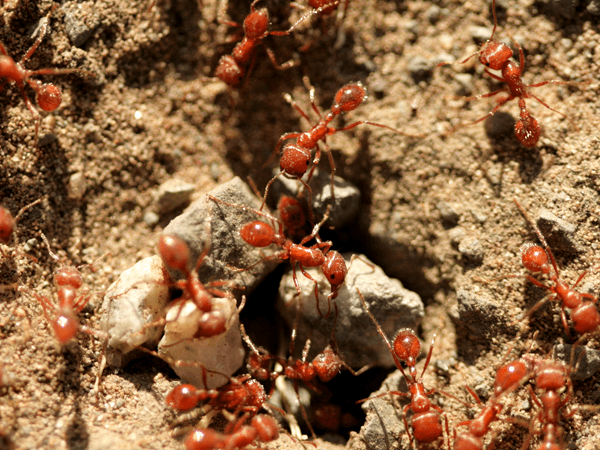
- Size: 1/16 to 1/4 inch (workers vary in size within the same colony; a giveaway feature)
- Color: Reddish-brown head and thorax with a darker brown to black abdomen
- Distinguishing features: Two-node petiole (waist), 10-segmented antennae with a two-segment club, painful sting on contact
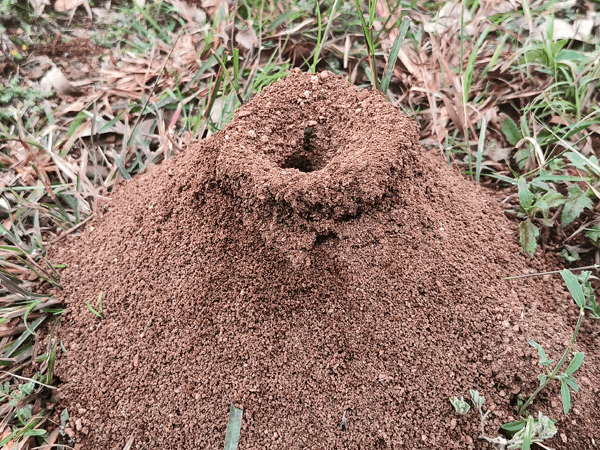
- Mounds: Dome-shaped loose soil, 6 to 18 inches across, no visible top opening
Where You Find Them in Coastal NC
Red imported fire ants thrive in the warm, humid climate and sandy soils of southeastern North Carolina. They are most active from spring through fall and slow down significantly during winter cold snaps without disappearing.
You’ll find their mounds in:
- Sunny open lawns and yards, especially after rain
- Pasture and field edges
- Along driveways, sidewalks, and foundation lines
- Under landscape timbers, mulch, and concrete slabs
- In utility boxes and AC units (a known electrical-equipment attraction)
- Near outdoor pet feeding areas, trash, and compost bins
After heavy rain, colonies often relocate. You may notice a yard with no visible mounds suddenly develop several within 24 to 48 hours of a storm.
Signs of an Infestation
- Visible mounds in lawn or landscape beds, often appearing overnight after rain
- Aggressive ant response when a mound is disturbed: ants pour out by the hundreds, climb anything they touch, and sting
- Foraging trails of small to medium reddish-brown ants
- Stings and pustules on pets or people after time in the yard
- Damaged vegetable garden crops (RIFA feeds on seedlings, fruits, and beneficial insects)
What a Fire Ant Sting Actually Is
The pain from a fire ant sting is misleading because the word “bite” gets used so often. Fire ants do bite, but only to anchor themselves to skin. The actual injury comes from the stinger on the tail end of the worker, which pivots and drives in venom called solenopsin.
A typical reaction:
- Within seconds: Sharp burning sensation at each sting site
- Within minutes: Red, raised welt
- Within 24 hours: Small white pustule (a fluid-filled blister) at each sting site
- 3 to 10 days: Pustule resolves; some itching may continue
A single ant can sting multiple times in seconds. Most people who step on a mound receive dozens of stings before they can get away. About 1 to 3 percent of people develop serious allergic reactions; if breathing becomes difficult or swelling extends well beyond the sting sites, seek medical care immediately.
Why They Matter
Fire ants are aggressive, persistent, and dangerous in ways most native ants aren’t:
- Painful, swarming stings make yards unsafe for kids, pets, and outdoor work
- Allergic reactions can be severe in sensitive individuals
- Equipment damage when colonies nest in AC units, electrical outlets, and irrigation boxes
- Wildlife and pet harm including stings on dogs, ground-nesting birds, and small mammals
- Yard takeover as colonies displace native ant species and spread quickly across properties
A single mature colony contains 100,000 to 500,000 workers. A single queen can live up to seven years and lay 1,500 to 1,600 eggs per day. Without intervention, an unchecked yard can develop dozens of mounds in a single season.
How to Tell Red Imported Apart from
Black and Hybrid
| Feature | Red Imported | Black | Hybrid |
|---|---|---|---|
| Range in coastal NC | Dominant species | Extremely rare | Extremely rare |
| Mound appearance | Dome-shaped, loose soil | Same dome shape | Same dome shape |
| Sting | Severe, painful | Severe, painful (identical) | Severe, painful (identical) |
| Treatment approach | Bait + direct mound treatment | Same as RIFA | Same as RIFA |
If you have fire ants in coastal NC, they’re almost certainly Red Imported.
Visit the Black Fire Ant or Hybrid Fire Ant pages if you want full detail on those species.
Why Store-Bought Treatments Fail
Almost every homeowner has tried at least one of these:
- Granular mound treatments: Kill visible workers but rarely reach the queen
- Liquid drenches: Effective on the mound treated, but neighboring colonies move in
- DIY home remedies (boiling water, gasoline, dish soap): Dangerous, ineffective, and often illegal
- One-time professional spray: Kills surface ants without breaking the colony
The fundamental problem is the queen. She can live up to seven years and is buried deep in the mound. If she survives, the colony rebuilds. If she dies but neighboring colonies are intact, new mounds appear within weeks.
How Healthy Home Treats Red Imported Fire Ants
Effective fire ant control requires a two-part approach:
- Broadcast bait applied across the entire yard. Workers carry the bait back to the queen, eliminating the colony from the inside over several weeks.
- Direct mound treatment for active visible mounds, providing fast knockdown while the bait works.
Quarterly service maintains a protected perimeter and prevents new colonies from establishing from neighboring properties. Our technicians inspect for new mounds at every visit and treat as needed.
Covered Under:
- Home + Yard Protection ($935/year)
- Home + Mosquito Protection ($1,250/year)
- Ultimate Protection Plan ($1,545/year)
- Essential Home Protection (does not include yard treatment)
If fire ants are your primary concern and you don’t currently have a plan, the Home + Yard tier is the entry point. If you’re also dealing with mosquitoes (also a coastal NC summer problem), Home + Mosquito bundles both for less than buying them separately.
Frequently Asked Questions
The Red Imported Fire Ant accounts for nearly all fire ant activity in the region. Black Imported and Hybrid Fire Ants are concentrated in the northern Gulf states; finding either in coastal NC is rare.
Move away from the mound immediately, brush off any remaining ants (don’t slap; they’re anchored by their jaws), and wash with soap and water. Cold compresses and over-the-counter antihistamines help with itching. Do not pop the pustules; they can become infected. Seek medical care if you experience widespread swelling, difficulty breathing, or signs of an allergic reaction.
Yes. RIFA is attracted to electrical equipment and can short-circuit outdoor AC units, irrigation controllers, and electrical boxes. If you’ve seen mounds near outdoor equipment, mention it during service.