

Wolf Spiders in Coastal Southeastern North Carolina
Wolf spiders are big, hairy, and fast, which is why they earn so many panicked calls. They look exactly like what a homeowner expects a ‘dangerous spider’ to look like. The truth is the opposite: they’re harmless hunters that flee from humans, don’t build webs, and help keep other pests in check.
If you’ve seen a large brown spider sprinting across your garage floor or basement, it was almost certainly a wolf spider. They’re one of the most common large spiders in coastal NC, and they’re far more afraid of you than you are of them.
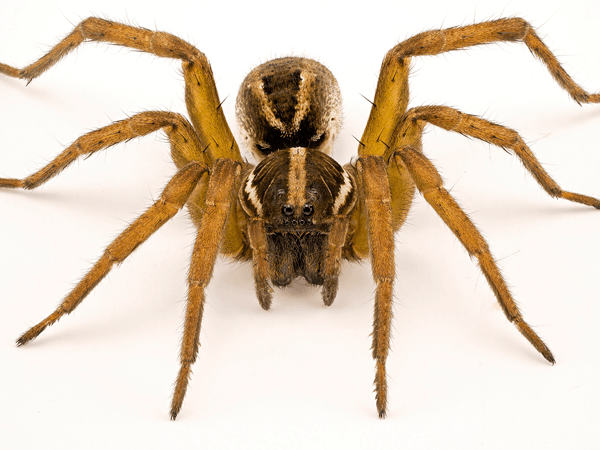
Quick Identification
- Size: Body 1/2 to 1.5 inches; with legs, up to 4 inches across in the largest species
- Color: Mottled brown, gray, and tan; pattern provides camouflage against soil and leaf litter
- Distinguishing features: Hairy body and legs; eight eyes in three rows (two large central eyes are most prominent); robust build
- Behavior: Doesn't build webs to catch prey; hunts by running down insects at night; fast movement
Eye Pattern Trick
If you can shine a flashlight on a wolf spider at night, their two large central eyes reflect the light back like cat eyes. This is a distinctive identification feature you won’t see in most other spider species. It’s also kind of unsettling to discover for the first time.
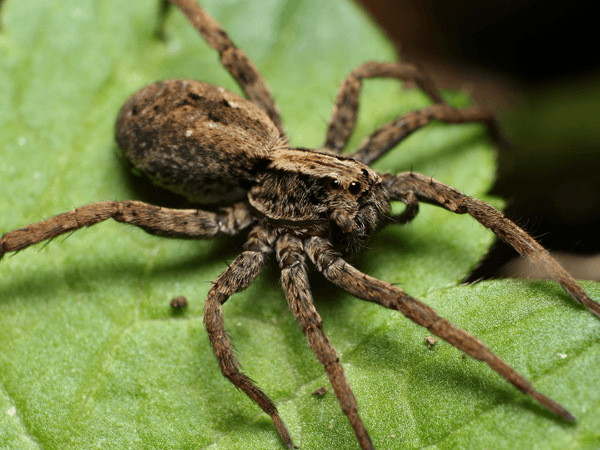
How to Tell Wolf Spiders from Brown Recluses
This is the most common worry. Wolf spiders are very different from brown recluses:
- Size: Wolf spiders are much larger; brown recluses are about 3/8-inch body length
- Hair: Wolf spiders are noticeably hairy; brown recluses are smooth
- Eyes: Wolf spiders have eight eyes; brown recluses have six
- Body shape: Wolf spiders have a robust, sturdy build; brown recluses are flatter and more uniform
- Markings: Wolf spiders are mottled; brown recluses have a distinct violin marking
- Movement: Wolf spiders are fast and obvious; brown recluses are quick and tend to stay hidden
Where You Find Them in Coastal NC
Wolf spiders are primarily outdoor hunters that occasionally come indoors:
- Lawns and gardens (their primary habitat)
- Mulch beds, leaf litter, and under stones
- Garages, basements, and crawl spaces
- Near garage doors and entryways
- Around outdoor lighting (chasing the insects drawn to lights)
- In sheds, woodpiles, and outbuildings
Why They Matter (Less Than You Think)
- Beneficial pest control: Wolf spiders eat cockroaches, crickets, beetles, and other insects in large numbers
- Harmless to people: Reluctant to bite; even rare bites are not medically significant
- Visual fear factor: The main issue is psychological; large hairy spiders scare people regardless of actual risk
- Single individuals indoors: Unlike colony pests, wolf spiders indoors are usually one accidental visitor at a time
Female Wolf Spiders and Their Egg Sacs
If you see a wolf spider with what looks like a small ball attached to her abdomen, that’s an egg sac. Female wolf spiders carry their egg sacs around with them, then carry the newly hatched spiderlings on their back for a few weeks after hatching. This is unique to wolf spiders and is one of the easiest identification features.
This is also why crushing a wolf spider can occasionally release a dozen or more tiny spiderlings. Catching and releasing outdoors is gentler for everyone involved.
How Healthy Home Treats Wolf Spider Activity
Wolf spider control focuses on perimeter treatment and reducing the insect populations they hunt. Healthy Home covers wolf spiders under every protection plan.
- Foundation and perimeter treatment to discourage entry
- Garage doors, basement windows, and ground-level entry points addressed specifically
- Reducing prey populations, the most effective long-term control
- Outdoor harborage areas (mulch beds, woodpiles, stone piles) addressed during yard-inclusive plans
How to Reduce Wolf Spider Activity
- Seal gaps around garage doors, basement windows, and ground-level entries
- Move mulch and ground cover at least 18 inches from the foundation
- Reduce outdoor lighting at night, or use yellow bug-resistant bulbs
- Remove leaf litter and debris piles from around the home
- Address other pest issues; fewer prey insects mean fewer hunting spiders
- Store firewood and stones at least 20 feet from the house
Covered Under:
- Home + Yard Protection ($935/year)
- Home + Mosquito Protection ($1,250/year)
- Ultimate Protection Plan ($1,545/year)
- Essential Home Protection (does not include yard treatment)
Frequently Asked Questions
No. Wolf spiders look intimidating because of their size and hairy appearance, but they’re not medically significant. Their bites cause local pain and minor swelling at worst. They’re reluctant to bite and almost always flee when encountered.
No. Wolf spiders are much larger, hairier, and have eight eyes arranged in three rows. Brown recluses are smaller, smooth-bodied, and have six eyes in three pairs with a violin marking. Wolf spiders are common in coastal NC; brown recluses are rare.
Wolf spiders enter homes accidentally while hunting, usually through ground-level gaps, garage doors, or while chasing prey. They prefer outdoor habitats and don’t establish indoor populations. A wolf spider indoors is usually a single individual that wandered in by mistake.
Best option: catch it in a cup with a piece of paper and release it outside. Wolf spiders are beneficial outdoors. They won’t establish a population indoors, and removing them is humane and effective.
Cooler temperatures bring wolf spiders closer to homes seeking warmth, and outdoor prey populations decline. Fall is when wolf spider sightings indoors peak in coastal NC.