

Brown Widow Spiders in Coastal Southeastern North Carolina
Brown Widows are the less famous cousin of the Black Widow. They’ve been steadily spreading through the southeastern U.S. over the past 20 years, and they’re now well-established in coastal NC. They build webs in similar locations to Black Widows but are even more common in human-built environments: the undersides of outdoor furniture, fence corners, eaves, and outdoor storage.
Their venom is technically more potent than Black Widow venom, drop for drop, but they inject far less per bite. Bites are usually less severe but still warrant medical attention. The bigger story with Brown Widows is how common they’re becoming in coastal NC compared to a decade ago.
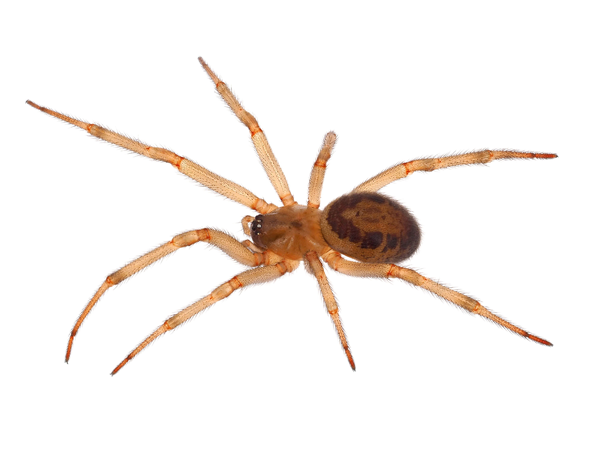
Quick Identification
- Size: Female body about 1/2 inch; legs span about 1.5 inches
- Color: Tan to dark brown (sometimes nearly black on older females); marbled patterns on the abdomen
- Distinguishing features: Orange (not red) hourglass marking on the underside of the abdomen; banded legs in lighter individuals
- Body Shape: Same overall shape as Black Widow (round bulbous abdomen, thin legs)
- Egg sacs: Distinctive spiky projections; look like miniature spiked balls. Black Widow egg sacs are smooth.
Brown Widow vs Black Widow
- Color: Brown Widow is tan to brown; Black Widow is glossy black
- Hourglass color: Brown Widow's is orange; Black Widow's is red
- Egg sacs: Brown Widow egg sacs have spiky projections; Black Widow egg sacs are smooth
- Venom potency: Brown Widow venom is more concentrated, but they inject less
- Bite severity: Brown Widow bites are usually milder than Black Widow bites
- Habitat preference: Brown Widows are more associated with human-built structures; Black Widows prefer more natural, sheltered spots
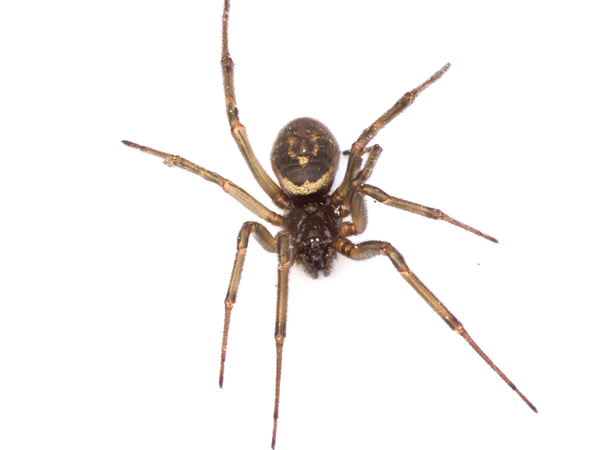
Where You Find Them in Coastal NC
Brown Widows thrive in residential and commercial settings:
- Undersides of outdoor furniture (especially patio chairs and grills)
- Around fence posts, mailboxes, and railings
- Eaves, soffits, and roof returns
- Inside outdoor electrical boxes, water meter boxes, and AC units
- In garage corners, especially around stored items
- Under porch overhangs and deck steps
- Inside playground equipment, swing sets, and trampolines
Their preference for human-built structures means they’re often found in higher-traffic areas than Black Widows. This increases the chance of accidental contact.
Why They Matter
- Medically significant venom: Bites cause local pain, redness, swelling, and occasionally systemic symptoms
- More accessible habitats: Their preference for outdoor furniture and structures puts them closer to human activity than Black Widows
- Spreading population: Brown Widow populations in the southeastern U.S. have grown significantly; coastal NC is well within their established range
- Hidden egg sacs: Spiky egg sacs hidden in fence corners or under furniture can produce dozens of new spiders
- Higher encounter rate: Because they live in human-built structures, accidental encounters are more common than with Black Widows
Brown Widow Bite Symptoms
Brown Widow bites typically produce:
- Within minutes: Sharp pain at the bite site; small red marks may appear
- Within 1 hour: Localized swelling, redness, and pain
- Hours to days: Pain remains localized in most cases; mild systemic symptoms (nausea, sweating) occur in some bites
- Recovery: Most symptoms are resolved within 1 to 3 days without intervention
Severe systemic reactions are much less common than with Black Widow bites, but anyone with significant symptoms should still seek medical care.
How Healthy Home Treats Brown Widows
Brown Widow treatment is like Black Widow but focuses more on residential structures and outdoor furniture areas. Healthy Home covers Brown Widows under every protection plan.
- Inspection of outdoor furniture, fence corners, eaves, soffits, and stored items
- Egg sac removal during inspection to prevent next generation
- Targeted application in established harborage areas
- Perimeter treatment to discourage new colonization
- Quarterly maintenance to catch new individuals before they establish
How to Reduce Brown Widow Risk
- Check under outdoor furniture before sitting; sweep undersides regularly
- Inspect playground equipment, especially before children use it after time away
- Wear gloves when handling stored outdoor items, BBQ covers, and rarely used outdoor gear
- Sweep down webs and egg sacs from fence corners, eaves, and outdoor structures
- Reduce outdoor lighting near eaves and porches at night (light attracts the insects that spiders eat)
- Move outdoor cushions and pillows inside or into sealed storage when not in regular use
Covered Under:
- Home + Yard Protection ($935/year)
- Home + Mosquito Protection ($1,250/year)
- Ultimate Protection Plan ($1,545/year)
- Essential Home Protection (does not include yard treatment)
Frequently Asked Questions
No. Brown Widow venom is technically more potent drop-for-drop than Black Widow venom, but Brown Widows inject far less venom per bite. Bite symptoms are usually milder than Black Widow bites, though still painful and worth medical attention.
Brown Widows are tan to dark brown with an orange hourglass marking. Black Widows are glossy black with a red hourglass. Brown Widow egg sacs have distinctive spiky projections; Black Widow egg sacs are smooth and round.
Yes, under every protection plan. Treatment focuses on harborage areas where Brown Widows establish, including the undersides of outdoor furniture, eaves, fence corners, and outdoor storage areas.
Brown Widows have been spreading through the southeastern U.S. for decades. Their adaptability to human-built environments, combined with our warm climate, makes coastal NC an ideal habitat. They’re now well established here and are likely to become more common in the coming years.
Research suggests that Brown Widows may compete with and reduce Black Widow populations in areas where they overlap. In some southeastern locations, Brown Widows have become more common while Black Widow sightings have declined. The relationship in coastal NC is still being studied.
Don’t try to remove it bare-handed. Either kill it with a spray (from a safe distance) or call us. Look for egg sacs nearby; if you find any spiky egg sacs, remove them too.