

Argentine Ants in Coastal Southeastern North Carolina
Argentine ants are one of the most successful invasive ant species in the world. Unlike most ants, they form massive supercolonies with multiple queens and interconnected nests that can span entire neighborhoods. This makes them particularly difficult to eliminate.
If you’re seeing long trails of small light-brown ants on your property, especially in the kitchen, on patios, or along sidewalks, Argentine ants are a likely culprit.
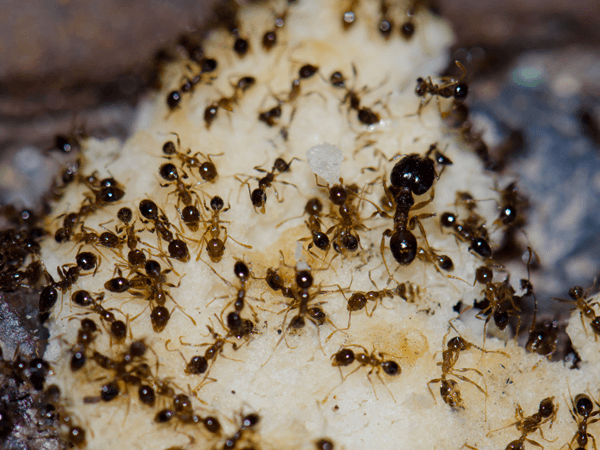
How to Identify Argentine Ants
- Size: About 1/8 inch
- Color: Light to medium brown, uniform across the body
- Shape: Light to medium brown, uniform across the body
- Antennae: 12-segmented
- Smell when crushed: Faint musty smell (much weaker than odorous house ants)
- Trail behavior: Travel in distinct, dense trails rather than scattered foraging
Why Argentine Ants Are Different
Most ant species have one queen per nest and defend the colony’s territory aggressively against neighboring colonies. Argentine ants don’t behave this way. Their colonies recognize members of other nearby Argentine ant nests as related, so they cooperate instead of competing.
The result is supercolonies that can stretch across entire residential blocks, with millions of workers and thousands of queens. Eliminating one nest does almost nothing to the broader population.
Argentine ants forage for:
How to Tell Black from Red Imported
The two species look similar at a glance, behave identically, and sting just as painfully.
The reliable identifier is color:
| Feature | Red Imported | Black | Hybrid |
|---|---|---|---|
| Color | Reddish-brown head/thorax, darker abdomen | Uniformly dark brown to black | Intermediate, variable |
| Range in coastal NC | Dominant species | Extremely rare | Extremely rare |
| Mound appearance | Dome-shaped, loose soil | Same dome shape | Same dome shape |
| Sting | Severe, painful | Severe, painful (identical) | Severe, painful (identical) |
| Treatment approach | Bait + direct mound treatment | Same as RIFA | Same as RIFA |
If you’re in coastal NC and have fire ants, the simplest explanation is correct: they are Red Imported.
Visit the Red Imported Fire Ant page for full identification details, sting information, and treatment specifics.
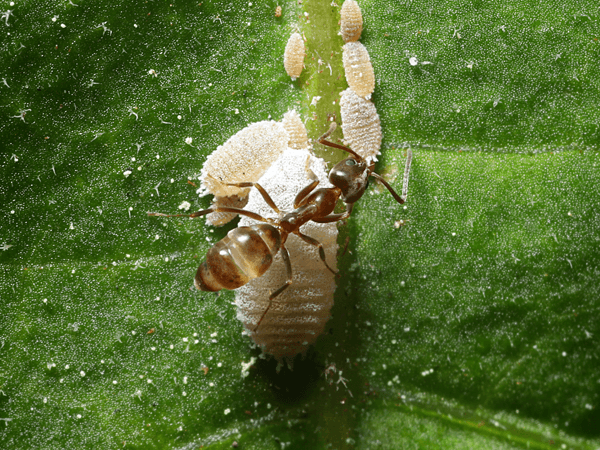
What Argentine Ants Want
Argentine ants forage for:
- Sugary foods (especially fruit, syrup, juice spills)
- Insect honeydew (aphids on plants attract them)
- Pet food
- Water sources, particularly during dry weather
They follow established trails between food sources and nests, often using the same routes for weeks at a time.
How Healthy Home Treats Argentine Ants
Argentine ants are covered under all four annual protection plans. Effective treatment requires:
- Identifying foraging trails and the harborage points along them
- Slow-acting baits that workers carry back to the supercolony
- Quarterly follow-up to maintain pressure on the population
- Treatment of plant areas that attract aphids (a major Argentine ant food source)
DIY treatment almost never works on Argentine ants because the supercolony absorbs losses easily. Consistent, ongoing professional pressure is what produces results.
Covered Under:
- Home + Yard Protection ($935/year)
- Home + Mosquito Protection ($1,250/year)
- Ultimate Protection Plan ($1,545/year)
- Essential Home Protection (does not include yard treatment)
Frequently Asked Questions
Argentine ants form supercolonies with multiple queens and interconnected nests spanning entire neighborhoods. Eliminating a single nest doesn’t reduce the population because workers from neighboring nests immediately move in. Effective control requires consistent, ongoing treatment rather than one-time applications.
Argentine ants are small (about 1/8 inch), uniform light to medium brown, and travel in distinct trails. They have a single-segmented waist and lack the dark abdomen contrast of fire ants. When crushed, they have no strong odor (unlike odorous house ants).
Argentine ants can bite but rarely do, and the bite is not painful or medically significant. They don’t have a functional stinger. The problem with Argentine ants is their persistence, not their direct threat to humans.