
Orb Weavers in Coastal Southeastern North Carolina
Orb weavers are the spiders behind the dramatic circular webs you’ll see in gardens, between porch railings, and across walkways in late summer and fall. The webs can stretch three feet across, and the spiders sitting in the center sometimes reach two inches across with their legs spread. They’re easily the most visible and photographed spiders in coastal NC, and among the least harmful.
If you’ve walked face-first into one of their webs, you know they’re impressive engineers. The good news is the spider almost certainly fled before you got close, and even if you touched it, the bite risk is essentially zero.
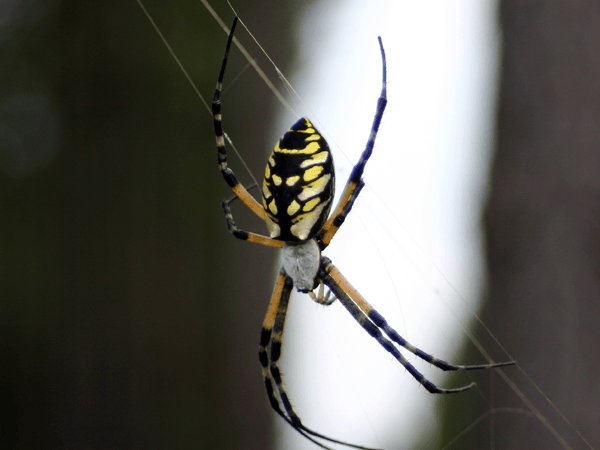
Quick Identification
- Size: Body 1/4 to 1 inch; with legs, up to 3 inches across (the largest species in our yards)
- Color: Varies enormously by species: yellow and black, brown and white, green, orange, or mottled
- Distinguishing features: Sits in the center of a large, round geometric web; large, rounded abdomen; long legs
- Web type: Classic geometric circular web with spokes radiating from a center hub
Common Orb Weaver Species in Coastal NC
Yellow Garden Spider (Argiope aurantia)
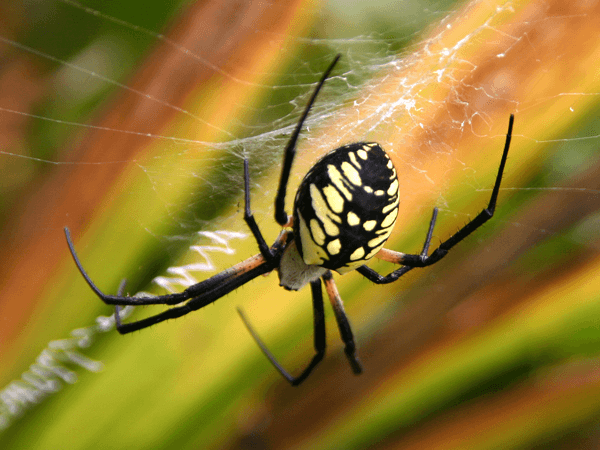
The most recognized orb weaver. Yellow and black body, often with a distinctive white zigzag pattern (called a stabilimentum) in the web. Females grow to about 1 inch in body length; legs span up to 3 inches. Builds webs in sunny garden locations.
Spotted Orb Weaver (Neoscona crucifera)
Brown to orange with darker spots; typically with a body about 1/2 to 3/4 inch. Builds webs at night, often around porch lights and house siding, then takes them down at dawn.
Marbled Orb Weaver (Araneus marmoreus)
Distinctive marbled or mottled pattern in orange, yellow, and brown. Body about 1/2 inch. Often called the ‘Halloween spider’ because they’re most visible in October.
Where You Find Them in Coastal NC
Orb weavers are outdoor spiders. They almost never come indoors.
- Garden beds, especially among tall plants
- Between trees, shrubs, and fence posts
- Across walkways, deck railings, and porch openings
- Around porch lights and outdoor lighting
- In tall grass, brush, and field edges
- Along the edges of buildings, between gutters and siding
Activity peaks from August through October as spiders reach full adult size and their webs become most visible.
Why They Matter (Mostly in a Good Way)
- Pest control: A single large orb weaver eats hundreds of flying insects per week, including mosquitoes and biting flies
- Harmless to people and pets: Bites are extraordinarily rare, even when humans touch them; venom is too mild to affect humans
- Aesthetic concern: The webs can stretch across walkways or between cars and other in-the-way spots
- Seasonal nature: Adults die in the fall after laying eggs; the dramatic webs go away on their own by winter
- Pollinator-safe: Unlike pesticide spraying, orb weavers don't harm bees or butterflies (they don't catch them in webs in significant numbers)
How Healthy Home Approaches Orb Weavers
We generally recommend leaving orb weavers alone. They’re net-positive for any yard. Standard quarterly treatment doesn’t specifically target orb weavers because they’re not a pest concern.
For webs in problem locations (across a frequently used walkway, blocking a doorway, etc.), the easiest solution is mechanical: gently knock the web down with a broom. The spider relocates within a day or two and rebuilds in a different spot.
If a homeowner is fearful of spiders or has children playing near the webs, we can treat eaves, overhangs, and porch areas to reduce orb weaver activity in those specific spots.
How to Coexist with Orb Weavers
- Leave webs alone in low-traffic areas: they catch mosquitoes and other pests for free
- Use a broom to clear webs in walkways; the spider will rebuild elsewhere
- Reduce outdoor lighting at night (light attracts the insects orb weavers feed on, which attracts more orb weavers)
- Trim plants and shrubs back from walkways to reduce attachment points for webs in your path
- Take photos before knocking down webs; they're often beautiful
Covered Under:
- Home + Yard Protection ($935/year)
- Home + Mosquito Protection ($1,250/year)
- Ultimate Protection Plan ($1,545/year)
- Essential Home Protection (does not include yard treatment)
Frequently Asked Questions
No. Orb weavers are harmless to people and pets. They’re reluctant to bite, and their venom is too mild to affect humans, even on rare occasions when they do. They’re beneficial because they catch and eat large numbers of flying insects, including mosquitoes.
Orb weavers grow throughout the warm months and reach full size in late summer and fall. Their webs become most visible in August through October. The webs are an annual feature of coastal NC yards and disappear when the spider dies after laying eggs at the end of fall.
Most pest control professionals (us included) recommend leaving orb weavers alone. They’re net-positive in a yard ecosystem. If a web is in a high-traffic area, the easiest solution is to gently relocate the web by knocking it down, so the spider rebuilds elsewhere.
‘Banana spider’ is a common nickname for the Yellow Garden Spider (Argiope aurantia). It’s not the same as the true banana spider species found in Central America. The yellow-and-black garden spider in coastal NC is harmless and beneficial.
That’s called a stabilimentum. Researchers aren’t certain why orb weavers build it, but theories include making the web more visible to birds (so they don’t fly through and destroy it), attracting prey insects, or providing camouflage for the spider. Only some orb weaver species build them.