

Carpet Beetles in Coastal Southeastern North Carolina
Carpet beetles are small round beetles whose larvae cause real damage to natural-fiber items in homes. The adult beetles fly into homes from outdoor flower beds and lay eggs in protected indoor locations. The larvae then spend months feeding on wool, silk, fur, feathers, and similar materials before maturing.
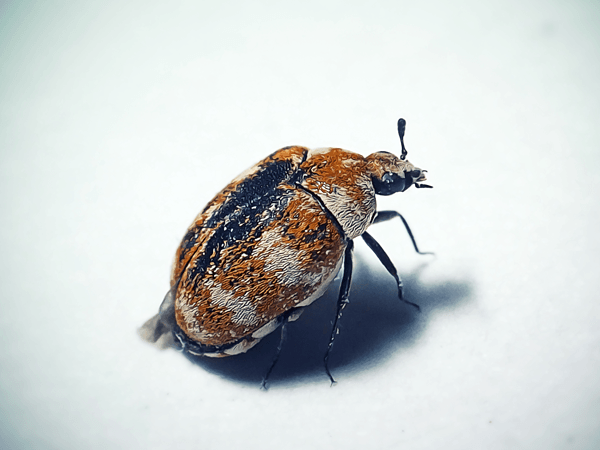
How to Identify Carpet Beetles
- Adults: 1/16 to 1/8 inch, round, patterned with white, brown, yellow, and black scales
- Larvae: 1/4 inch, fuzzy, brown or tan, caterpillar-shaped with tufts of hair
- Behavior: Adults often found on windowsills (attracted to light), larvae found in dark protected spots
- Damage signs: Small irregular holes in wool clothing, damaged carpets, larval skins (small empty husks)
The larvae cause damage. The adults don’t eat fibers.
What They Eat
Carpet beetle larvae feed on materials containing keratin or natural protein:
- Wool clothing, carpets, and rugs
- Silk garments and accessories
- Fur coats, hats, and stoles
- Feathers in pillows, comforters, and decorative items
- Leather goods
- Pet hair accumulations
- Taxidermy and natural history collections
- Stored dry pet food
- Dead insects in window tracks and corners
Synthetic materials (polyester, nylon, acrylic) are not eaten.
How to Tell Black from Red Imported
Some description text for this item
The two species look similar at a glance, behave identically, and sting just as painfully.
The reliable identifier is color:
| Feature | Red Imported | Black | Hybrid |
|---|---|---|---|
| Color | Reddish-brown head/thorax, darker abdomen | Uniformly dark brown to black | Intermediate, variable |
| Range in coastal NC | Dominant species | Extremely rare | Extremely rare |
| Mound appearance | Dome-shaped, loose soil | Same dome shape | Same dome shape |
| Sting | Severe, painful | Severe, painful (identical) | Severe, painful (identical) |
| Treatment approach | Bait + direct mound treatment | Same as RIFA | Same as RIFA |
If you’re in coastal NC and have fire ants, the simplest explanation is correct: they are Red Imported.
Visit the Red Imported Fire Ant page for full identification details, sting information, and treatment specifics.
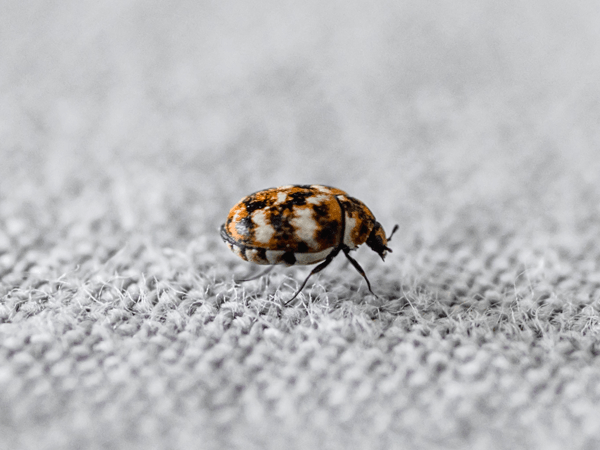
Where Larvae Hide
Carpet beetle larvae prefer dark, protected, undisturbed locations:
- Inside stored clothing (closet boxes, attic storage)
- Under furniture (especially in less-trafficked rooms)
- Along baseboards in carpeted rooms
- In air ducts and vents (where pet hair accumulates)
- Behind dressers and beds
- In wool blankets stored seasonally
A common sign is finding larval skins (empty fuzzy husks) accumulating in corners or under furniture.
How Healthy Home Treats Carpet Beetles
Carpet beetles are covered under all four annual protection plans. Treatment combines:
- Inspection of likely larval harborage points
- Targeted treatment along baseboards and in storage areas
- Recommendations for cleaning and protective storage
- Quarterly follow-up
Effective long-term control combines treatment with practical changes (vacuuming under furniture, sealing wool items in plastic containers, eliminating accumulated pet hair).
Covered Under:
- Home + Yard Protection ($935/year)
- Home + Mosquito Protection ($1,250/year)
- Ultimate Protection Plan ($1,545/year)
- Essential Home Protection (does not include yard treatment)
Frequently Asked Questions
Adult carpet beetles are tiny (1/16 to 1/8 inch), round, and patterned with white, brown, yellow, and black scales. They look almost like miniature ladybugs. The larvae are more commonly seen indoors: small, fuzzy, brown or tan caterpillar-like creatures about 1/4 inch long with tufts of hair. The larvae are what cause the damage.
Carpet beetle larvae eat natural fibers including wool, silk, fur, feathers, leather, and pet hair. Common damage includes holes in wool sweaters, carpet damage in less-trafficked areas, damaged taxidermy, and damaged stored clothing. They don’t eat synthetic fibers like polyester or nylon. Adult beetles don’t cause damage. The larvae are the destructive stage.
Adult carpet beetles fly into homes through open windows and doors, especially in spring and early summer. They’re attracted to light and often gather on windowsills. Once inside, females lay eggs in protected spots near food sources for the larvae. Adult beetles also enter on cut flowers, used furniture, and second-hand clothing.