

American House Spider in Coastal Southeastern North Carolina
If you’ve found a small brown spider in a corner of your basement, garage, or behind furniture, it’s almost certainly an American House Spider. They’re the most common indoor spider in coastal NC homes, and they’re the source of nearly every cobweb you’ve ever swept down. They’re also completely harmless to people and pets, and they help by eating other indoor pests.
Most calls we get about ‘a brown spider’ end up being American House Spiders, not brown recluses. The two look nothing alike when you know what to look for, but the size, color, and location overlap enough that people understandably worry.
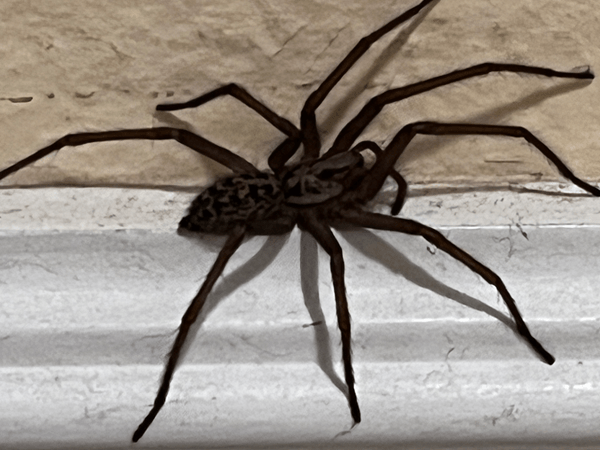
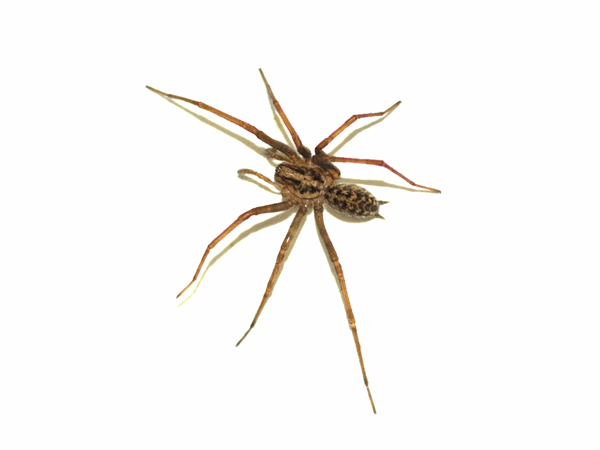
Quick Identification
- Size: Body about 1/4 inch; with legs, about 1 inch across
- Color: Tan to brown with darker markings; sometimes with faint patterns on the abdomen
- Distinguishing features: Round bulbous abdomen; eight eyes in two rows; long thin legs; sits in the center of a tangled cobweb
- Web type: Messy tangled cobweb, typically in corners (not the geometric circular web of orb weavers)
How to Tell It Apart from a Brown Recluse
This is the question we hear most about house spiders. The answer:
- Eyes: House spiders have eight eyes in two rows of four. Brown recluses have six eyes arranged in three pairs.
- Web behavior: House spiders sit in cobwebs and catch prey there. Brown recluses don't use webs for hunting; they hunt by wandering at night.
- Body shape: The house spider's abdomen is round and bulbous. The brown recluse's body is flatter and more uniform.
- Markings: Brown recluses have a distinct violin-shaped mark behind the head. House spiders don't.
- Commonality: If you find a brown spider in coastal NC, the math heavily favors the house spider. Brown recluses are uncommon here.
Where You Find Them in Coastal NC
- Corners of ceilings, especially in garages and basements
- Behind furniture and inside closets
- In window frames and around light fixtures
- In sheds, outbuildings, and crawl spaces
- Under porches, decks, and patio overhangs
- In undisturbed storage areas
They prefer quiet, undisturbed spots where they can build webs without being knocked down. Active living areas usually have less spider activity than basements, garages, and storage rooms.
Signs You Have Them
- Tangled cobwebs in corners of ceilings and walls
- Egg sacs: small brown papery balls in webs (each contains 100-400 eggs)
- Small brown spiders sitting in webs, often upside down
- Drained insect carcasses near webs
- Multiple webs in the same general area (house spiders tolerate each other's presence)
Why They Matter (And Why You Might Want Some)
American House Spiders are net-beneficial to your home:
- Pest control: They eat flies, mosquitoes, moths, ants, and other indoor pests
- Not aggressive: They flee rather than attack; bites are extremely rare, even when humans touch them
- Mild venom: Even on the rare occasion of a bite, the venom causes minor local irritation at most
- Visual nuisance: The main issue is cobwebs and egg sacs in visible areas
How Healthy Home Treats Spider Activity
Spider control is part of every Healthy Home protection plan. Treatment focuses on reducing the insect populations spiders feed on (which reduces spider populations indirectly) and treating the areas where spiders build webs.
Treatment includes:
- Foundation and perimeter treatment to reduce spider entry
- Eaves, overhangs, and outdoor lighting areas treated to discourage web-building
- Garages, basements, and crawl spaces addressed during interior treatments
- Web removal guidance for homeowners (cobwebs in untreated areas continue to attract new spiders)
- Quarterly maintenance keeps populations low year-round
How to Reduce House Spider Activity
- Sweep down cobwebs regularly (spiders rebuild more slowly in disturbed areas)
- Reduce outdoor lighting at night or switch to yellow bug-resistant bulbs (light attracts the insects spiders eat)
- Seal cracks and gaps around windows, doors, and utility penetrations
- Reduce clutter in basements, garages, and closets
- Address other pest issues (fewer insects in the home means fewer spiders)
Covered Under:
- Home + Yard Protection ($935/year)
- Home + Mosquito Protection ($1,250/year)
- Ultimate Protection Plan ($1,545/year)
- Essential Home Protection (does not include yard treatment)
Frequently Asked Questions
No. They’re harmless to people and pets, reluctant to bite, and their venom causes only minor local irritation in rare cases when they do bite. They’re beneficial because they eat other indoor pests.
American House Spiders have eight eyes arranged in two rows, build messy cobwebs in corners, and have a round, bulbous abdomen. Brown recluses have six eyes in three pairs, don’t build webs to catch prey, and have a distinct violin-shaped marking. House spiders are far more common in coastal NC.
Yes, under the Ultimate Protection Plan. Other plans handle rodent activity case-by-case. Treatment includes trapping, exclusion, and burrow elimination.
Yes, all spider species are covered under every protection plan. Quarterly treatment reduces spider populations by treating the foundation, eaves, and entry points where spiders enter and build webs.
Garages are ideal habitats for house spiders: undisturbed corners, abundant insect prey (drawn to lights), and easy outdoor access. Garages and basements are typically the areas with the highest house spider populations in coastal NC homes.
No. House spiders occasionally wander into beds, but bites are extraordinarily rare. They flee from movement and disturbance. If you find one, gently move it outside or to an unused area.