

Deer Mouse in Coastal Southeastern North Carolina
Deer mice are the outdoor cousins of the house mouse. They prefer woods, fields, sheds, and outbuildings to living in homes year-round, but they readily move into garages, cabins, attics, and crawl spaces when the weather turns. They’re more common in coastal NC than most homeowners realize, especially in homes near woods, water, or open fields.
The reason this species gets its own page is hantavirus. Deer mice are the primary carrier in the United States. Hantavirus infection is rare in North Carolina, but it’s real, and it’s serious, and cleaning up deer mouse droppings the wrong way is the primary risk factor.
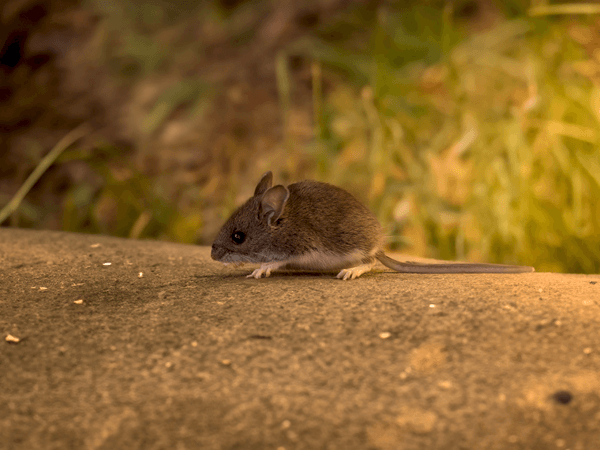
Quick Identification
- Body length: About 3 to 4 inches
- Tail length: About 2 to 5 inches; often slightly shorter than body and clearly two-toned
- Color: Strikingly two-toned: brown to grayish-brown on top, white on the belly and feet
- Distinguishing features: White feet, white belly, large dark eyes, large, rounded ears with a slight pinkish edge
How to Tell a Deer Mouse from a House Mouse
- Color pattern: Deer mice are two-toned (brown above, white below); house mice are uniformly gray brown
- Feet: Deer mice have clearly white feet; house mouse feet match their body color
- Eyes: Deer mouse eyes are larger and more prominent
- Habitat preference: Deer mice prefer outdoor or transitional spaces (sheds, garages, attics); house mice live entirely indoors
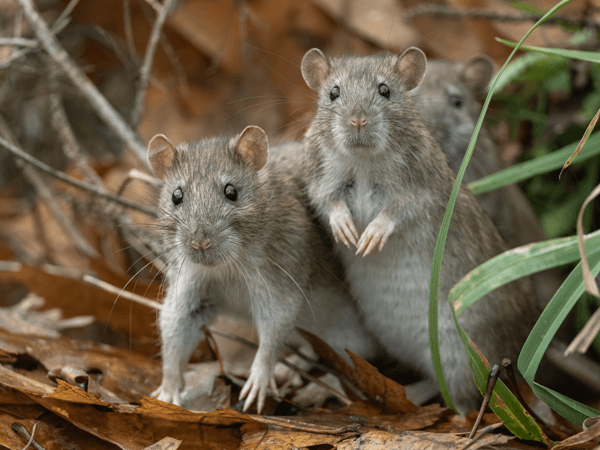
Where You Find Them in Coastal NC
Deer mice are common in semi-rural and rural areas of coastal NC, less so in dense urban settings:
- Sheds, barns, and detached garages
- Beach cottages and seasonal homes (especially after winter)
- Attics, crawl spaces, and basements with outdoor access
- Wood piles, debris piles, and stored boxes
- Boats, RVs, and outdoor equipment left undisturbed
- Foundation plantings and around outbuildings
They are more active in fall and winter as outdoor food sources decline and they seek shelter.
Signs of an Infestation
- Two-toned droppings that look similar to house mouse droppings but are slightly larger
- Nests of grass, leaves, fabric, or insulation in undisturbed corners
- Chewed packaging or insulation in storage areas, garages, or sheds
- Activity in outbuildings or seasonal structures when reopened after weeks of vacancy
- Mice running outside at dusk near foundations, woodpiles, or sheds
Hantavirus: What to Actually Know
Hantavirus Pulmonary Syndrome is a rare but serious illness caused by Sin Nombre virus, which deer mice carry. Here’s what’s true:
- Rare in NC: North Carolina sees very few cases per year; the disease is more common in the western United States
- How it spreads: Inhaling dust contaminated with deer mouse urine, droppings, or saliva, typically when cleaning a nest or disturbing droppings
- Not spread person-to-person: Hantavirus is not contagious between humans
- Safe cleanup matters: Never vacuum or sweep deer mouse droppings; both kick up infectious particles
- The right cleanup method: Spray droppings and nesting material with a 1:10 bleach solution, let it soak for 10 minutes, then wipe up with disposable towels while wearing gloves and an N95 mask
This is the main reason professional removal is worth it for deer mouse infestations: we clean up properly with the right protective equipment and disposal methods.
Why They Matter
- Hantavirus risk: Rare but serious; requires careful cleanup
- Other diseases: Deer mice can carry Lyme disease (as host for blacklegged ticks), tularemia, and other pathogens
- Property damage: Same gnawing, nest-building, and contamination as house mice
- Seasonal infestation pattern: Opening a cabin or shed for the first time in months often reveals significant activity
- Difficult to fully exclude: Outbuildings and beach cottages have many entry points; ongoing monitoring is usually needed
How Healthy Home Removes Deer Mice
Deer mouse removal includes the same approach as house mice, with added attention to safe cleanup:
- Inspection to identify nests, droppings, entry points, and travel routes
- Trapping and removal using methods appropriate for the structure (cabin, garage, attic, etc.)
- Safe cleanup of droppings and nesting material using proper disinfection and PPE
- Exclusion by sealing entry points to prevent re-entry
- Quarterly monitoring to catch new activity, especially seasonal
How to Prevent Deer Mice
- Seal entry points around foundations, vents, utility penetrations, and door sweeps
- Keep woodpiles, debris, and storage at least 18 inches from foundations
- Store pet food, birdseed, and grain in airtight containers in sealed structures
- Inspect cabins, sheds, RVs, and seasonal structures before extended use
- Clear brush and tall grass around outbuildings
- Trim tree limbs away from rooflines
Covered Under:
- Home + Yard Protection ($935/year)
- Home + Mosquito Protection ($1,250/year)
- Ultimate Protection Plan ($1,545/year)
- Essential Home Protection (does not include yard treatment)
Frequently Asked Questions
Deer mice are clearly two-toned: brown on top and white below, with white feet. House mice are uniformly gray-brown. Deer mice are also slightly larger, with larger black eyes and ears.
Hantavirus is a rare but serious virus carried by deer mice. It spreads when contaminated droppings or urine are disturbed and inhaled. North Carolina sees very few cases per year. The risk is low for normal homeowners, but real enough that disturbed nests should be cleaned with caution.
Deer mice are fully covered under the Ultimate Protection Plan. Other plans address rodent activity on a case-by-case basis. Removal includes safe cleanup of droppings and nesting material.
Never vacuum or sweep. Wear gloves and an N95 mask, spray the droppings with a 1:10 bleach solution, let it soak for 10 minutes, then wipe up with disposable paper towels and dispose of everything in sealed bags. If the infestation is heavy, professional cleanup is safer.
Open windows and doors for 30 minutes to ventilate before entering. Avoid disturbing visible droppings or nests until you can clean them properly. Schedule an inspection if you find significant activity.