

Brown Recluse Spiders in Coastal Southeastern North Carolina
Finding a brown recluse, or thinking you might have, is unsettling. They’re one of the few spiders in coastal southeastern North Carolina with a bite that can cause real tissue damage, and they hide in exactly the kinds of places people reach into without looking. The good news is they’re reclusive by nature (it’s literally in the name) and rarely bite unless trapped against skin.
This page walks through how to identify a brown recluse, where they hide, what their bite looks like, and how Healthy Home Pest Control treats them.
Already concerned about a brown recluse problem?
Skip ahead:
- How to identify them
- Where they hide
- What a bite looks like
- How Healthy Home treats them
How to Identify a Brown Recluse
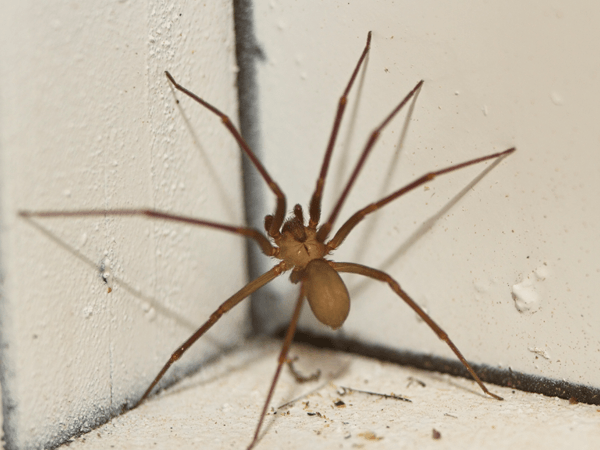
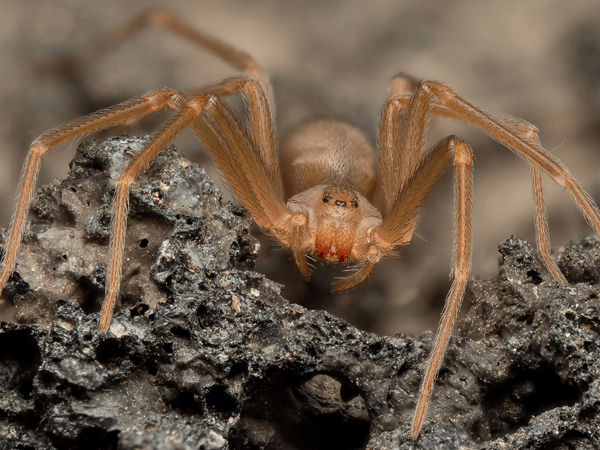
Brown recluses have specific identification features that distinguish them from the many harmless spiders that get mistaken for them.
Physical Features
- Size: About the size of a quarter, including legs. The body itself is 1/4 to 1/2 inch.
- Color: Light to medium brown, uniform across the body
- Violin marking: Dark violin-shaped marking on the back (cephalothorax), with the neck of the violin pointing toward the abdomen
- Eyes: Six eyes arranged in three pairs (this is the most reliable identifier, since most spiders have eight eyes)
- Legs: Long, thin, uniformly colored, no banding or stripes
- Abdomen: Solid color, no markings or patterns
The violin marking is the famous feature, but it can be faint or worn on some specimens. The six-eye arrangement is more accurate for positive identification.
Brown Recluse vs. Spiders That Get Mistaken For Them
Several spiders in coastal NC look enough like brown recluses to cause panic. Here's how to tell them apart.
| Feature | Brown Recluse | Wolf Spider | Cellar Spider | House Spider |
|---|---|---|---|---|
| Size | Quarter-sized | Half-dollar or larger | Long-legged, small body | Smaller than a dime |
| Color | Uniform tan/brown | Brown with darker patterns | Pale/translucent | Tan with darker bands |
| Body hair | Sparse, sleek | Distinctly hairy | Smooth | Sparse |
| Legs | Uniform, no markings | Often banded or patterned | Very thin, very long | Sometimes banded |
| Eyes | 6 eyes (3 pairs) | 8 eyes | 8 eyes | 8 eyes |
| Webs | No structured web | No web | Tangled web in corners | Tangled web |
| Behavior | Reclusive, hidden | Active hunter, may chase | Web-dweller | Web-dweller |
| Bite risk | Medically significant | Painful but not dangerous | Cannot pierce human skin | Mild, not dangerous |
If you found a spider and aren’t sure, the safest approach is to capture it (in a jar or container, not in your hand) and have it identified before assuming the worst.
Where Brown Recluses Hide {#hiding-spots}
The name “recluse” describes the behavior accurately. Brown recluses don’t build structured webs and they don’t hunt in the open. They tuck into undisturbed spaces and wait. Common hiding spots include:
Indoor Areas
- Attics and crawlspaces (especially around stored items)
- Basements and utility rooms
- Garages and outbuildings
- Cardboard boxes that haven't been moved in months
- Stacks of clothing, linens, or towels
- Behind picture frames, mirrors, or large furniture
- Inside rarely-worn shoes or boots
- Inside drawers that don't get opened often
- Behind baseboards and inside wall voids
- Around water heaters, furnaces, and HVAC equipment
Outdoor Areas
- Woodpiles
- Stacks of bricks, lumber, or building materials
- Under porches and decks
- Inside outbuildings (sheds, barns, detached garages)
Why Most Bites Happen
Brown recluses are not aggressive. They don’t chase, attack, or seek out humans. Almost every brown recluse bite happens when someone:
- Puts on a shoe or piece of clothing that's been sitting unworn
- Reaches into a box, drawer, or storage container without looking
- Rolls onto one in bed (sheets pulled from a stored location)
- Cleans out a long-undisturbed space (attic, basement, garage)
This is why brown recluse problems often go unnoticed for a long time. They’re not crossing your kitchen floor at night. They’re living in the corners of your storage spaces.
What a Brown Recluse Bite Looks Like {#bite}
Brown recluse bites are unusual in that they’re often painless at first. Many people don’t realize they’ve been bitten until symptoms develop hours or days later.
Typical Bite Progression
Hour 0: Often unnoticed. May feel like a pinprick.
Hours 2 to 8: Small red mark appears. Sometimes a small blister forms. Mild itching or stinging.
Hours 24 to 48: Pain and swelling increase. The bite area may become tender to the touch. The center of the bite can develop a small darker spot.
Days 3 to 7: In severe cases, the skin around the bite darkens significantly and forms a sunken, dry sore (called a necrotic lesion). This can be the size of a quarter or larger in serious cases. Some people experience fever, chills, body aches, or nausea.
Days 7 to 21: Healing begins, but severe bites may leave scars and take weeks to fully resolve.
When to Seek Medical Care
Seek medical attention if you suspect a brown recluse bite. The severity varies wildly, from minor and self-healing to serious tissue damage requiring professional treatment. Don’t wait to see how bad it gets.
Go to the emergency room immediately if you experience:
- Difficulty breathing
- Severe pain spreading beyond the bite site
- Fever above 102°F
- Rash spreading across the body
- Signs of severe allergic reaction (swelling of face, lips, tongue)
- Confusion, dizziness, or loss of consciousness
If possible, capture the spider (alive or dead) for identification. A confirmed brown recluse bite changes how doctors approach treatment.
What to Do for a Suspected Bite
While waiting for medical care:
- Wash the bite area with soap and water
- Apply a cold compress to reduce swelling
- Elevate the affected limb if possible
- Do not apply ice directly to skin
- Do not attempt to "suck out" or cut the bite
- Take an over-the-counter pain reliever if needed
- Photograph the bite and any progression (helps medical professionals assess severity)
How Healthy Home Treats Brown Recluse Spiders {#treatment}
Brown recluses don’t respond to standard surface sprays the way other pests do. They live deep in cracks and undisturbed areas, so treatment has to target those specific harborages. Healthy Home’s approach combines four elements.
The Treatment Process
- Inspection of common harborages. Attics, basements, crawlspaces, garages, storage rooms, and any other low-activity areas where brown recluses are likely to live.
- Targeted product application. Insecticide applied directly to cracks, crevices, baseboards, and harborages where spiders shelter and travel.
- Sticky monitor traps. Placed in key locations to track brown recluse activity over time. This confirms whether treatment is working and identifies areas with continued activity.
- Recommendations to reduce harborage. Brown recluses thrive in clutter and undisturbed storage. Treatment includes specific suggestions for sealing storage boxes, decluttering, and moving items off the floor.
- Quarterly follow-up. Every quarterly visit re-treats key areas and refreshes monitor traps.
Coverage Under Healthy Home Protection Plans
Brown recluse spiders are covered under all four of Healthy Home’s annual protection plans. This means the same treatment protocol kicks in regardless of which plan fits your home best.
Plan | Annual Price | Brown Recluse Coverage |
Essential | $540 | ✓ Included |
Home + Yard | $935 | ✓ Included |
Home + Mosquito | $1,250 | ✓ Included |
Ultimate | $1,545 | ✓ Included |
Why Professional Treatment Matters
Brown recluses are a population, not an individual problem. By the time someone sees one, there are typically more hidden in places nobody’s looked. DIY surface sprays may kill the occasional wanderer, but they don’t reach the population in walls, attics, and undisturbed storage.
Professional treatment uses products designed for crack-and-crevice application, monitor traps to track activity over time, and the consistency of quarterly visits to break the reproductive cycle.
Covered Under:
- Home + Yard Protection ($935/year)
- Home + Mosquito Protection ($1,250/year)
- Ultimate Protection Plan ($1,545/year)
- Essential Home Protection (does not include yard treatment)
If fire ants are your primary concern and you don’t currently have a plan, the Home + Yard tier is the entry point. If you’re also dealing with mosquitoes (also a coastal NC summer problem), Home + Mosquito bundles both for less than buying them separately.
Frequently Asked Questions About Brown Recluse Spiders
Yes. Brown recluse spiders are established throughout the southeastern United States, including coastal southeastern North Carolina. They’re not as common in coastal NC as they are in states further inland (Missouri, Arkansas, Tennessee), but they’re definitely present in Wilmington and across New Hanover, Brunswick, Pender, Duplin, and Columbus counties. Brown recluses prefer undisturbed indoor storage areas, which is where most encounters happen.
Brown recluse spiders are light to medium brown, about the size of a quarter, including legs, with a dark violin-shaped marking on the back. The most reliable identifier is the eye arrangement, six eyes in three pairs, because most spiders have eight eyes. The legs are long, thin, and uniformly colored without banding or stripes. The violin marking can be faint on some specimens, so the eye count is the most accurate identification feature.
A brown recluse bite is often painless at first. Symptoms develop over hours or days. Initial appearance is a small red mark, sometimes with a blister. Pain and swelling increase over 24 to 48 hours. In some cases, the skin around the bite darkens, forming what’s called a necrotic lesion. Some people experience fever, chills, or nausea. If you suspect a brown recluse bite, seek medical attention, because while most bites heal without serious complications, some can cause significant tissue damage.
Brown recluses live up to their name. They prefer undisturbed indoor spaces, including attics, basements, garages, cardboard boxes that haven’t been moved in months, stacks of clothing or linens, behind picture frames and furniture, inside rarely-worn shoes or clothing, and inside storage containers. Most bites occur when someone puts on a piece of clothing or reaches into a box where a recluse is hiding.
Brown recluse control requires targeting the specific harborages where they hide, not surface sprays. Healthy Home Pest Control’s recurring protection plans treat brown recluses as part of standard service. The approach combines inspection of typical hiding spots (attics, basements, crawlspaces, garages, storage areas), targeted application in cracks, crevices, and harborages, sticky monitor traps to track activity, and follow-up at each quarterly visit. Brown recluse coverage is included in all four annual protection plans starting at $540 per year.
Most brown recluse bites heal without medical intervention. However, a percentage of bites cause significant tissue damage (called necrotic lesions) that require professional medical treatment. The severity depends on the amount of venom injected, the location of the bite, and the individual’s reaction. Children, the elderly, and people with compromised immune systems are at higher risk for serious complications. Any suspected brown recluse bite should receive medical attention to assess severity.
Several harmless spiders are misidentified as brown recluse spiders. Wolf spiders are larger, hairier, faster-moving, and have eight eyes (not six). Cellar spiders (daddy long-legs) have very thin legs and small bodies, and they build webs in basements. House spiders are smaller and tan with darker markings. The most reliable way to distinguish a brown recluse is the six-eyed arrangement, three pairs, and the uniformly colored legs without any banding.
Surface sprays don’t reach where brown recluses hide. Brown recluses spend almost all of their time tucked into cracks, crevices, undisturbed storage, and similar harborages. Treatment has to target those specific spots with appropriate products and follow-up. DIY surface sprays may kill the occasional spider that wanders across them, but they don’t reach the population hiding in walls, attics, and storage areas.