

Pantry Moths in Coastal Southeastern North Carolina
Pantry moths, almost always the Indian Meal Moth in coastal NC, are the small two-toned moths that show up flying around kitchens, hovering near ceilings, and landing on light fixtures. By the time you see them flying, the larvae have usually been chewing through your dried food, cereal, flour, and pet food for weeks. Discovering an infestation typically means a pantry cleanout is in your near future.
The good news is they don’t bite, don’t damage your home, and don’t carry disease. They’re a contamination and quality-of-life problem, not a health threat.
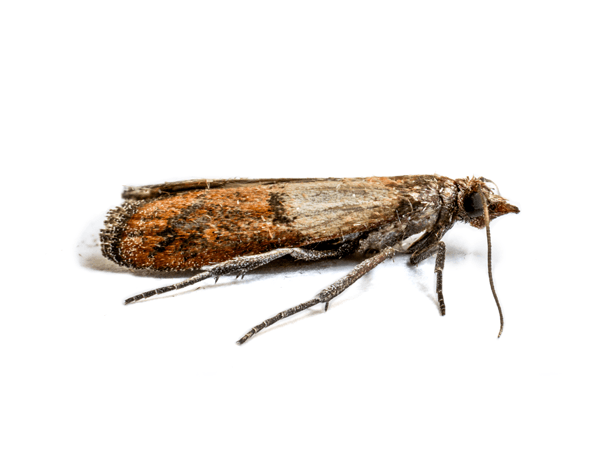
Quick Identification
- Adult Size: About 3/8 to 1/2 inch long; wingspan up to 5/8 inch
- Color: Distinctive two-toned wings: pale gray near the body, coppery reddish-brown at the wingtips
- Distinguishing features: Often seen flying in zigzag patterns near ceilings, especially in the evening; resting moths sit with wings folded tightly along the body
- Larvae: Cream to pink caterpillars up to 1/2 inch long; often spin silken webbing in food packages
Where You Find Them in Coastal NC
Pantry moth larvae target dry stored foods in kitchens, pantries, and food storage areas:
- Cereal, oatmeal, granola, and breakfast bars
- Flour, cornmeal, rice, and pasta
- Dried fruits, nuts, and seeds
- Dry pet food and birdseed
- Chocolate, candy, and baking ingredients
- Spices, particularly paprika and other ground spices
- Decorative items containing dried plant material (wreaths, gourds, dried corn)
Adult moths emerge from packages, fly throughout the kitchen, and lay eggs on nearby food sources, expanding the infestation rapidly.
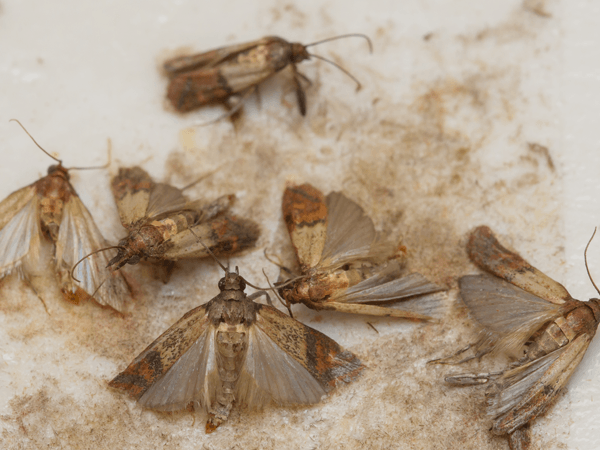
Why They Matter
Pantry moths cause quality-of-life and financial issues:
- Food contamination: Infested products must be discarded; a single contaminated package can spread larvae to nearby foods
- Rapid reproduction: A female lays 200 to 400 eggs over her lifespan; multiple generations per year in coastal NC
- Difficult to fully eliminate: Larvae leave food to pupate in cracks, on ceilings, and in packaging seams, hidden from view
- Re-infestation risk: Eggs in newly-purchased products continue the cycle indefinitely without preventive measures
Signs of an Infestation
- Small two-toned moths flying near ceilings, especially in the evening
- Silken webbing inside cereal boxes, flour bags, or pet food containers
- Cream-colored or pinkish caterpillars in or on dried food
- Caterpillars crawling up walls and along ceiling corners (they leave food to pupate)
- Small cocoons or pupae attached to ceiling corners, shelf edges, or behind cans
- A clumped or webbed appearance to food in the package
Where Pantry Moths Come From
Pantry moths almost never enter homes from outside the way ants or roaches do. They arrive inside packaged food that was already contaminated at the processing facility, warehouse, or retail store. Eggs are microscopic and easy to miss, so contaminated bags pass through retail without anyone seeing a problem. Once in your warm pantry, the eggs hatch and larvae feed inside the food for several weeks before emerging as adults.
This is why bulk-buying dried foods and storing them long-term in original packaging significantly increases pantry moth risk.
How Healthy Home Treats Pantry Moths
Pantry moth control combines professional treatment with pantry cleanout. Healthy Home covers pantry moths under every protection plan.
Treatment includes:
- Inspection to identify infested products, hidden pupation sites, and active larvae locations
- Targeted application in pantry cracks, shelf edges, ceiling corners, and other pupation hot spots
- Perimeter treatment around the kitchen to break the moth life cycle
- Quarterly maintenance to catch and stop new introductions before they spread
The homeowner is required to clean out the pantry: all infested products must be discarded, the pantry shelves vacuumed and wiped down, and the remaining acceptable products transferred to airtight glass or hard plastic containers.
How to Prevent Pantry Moths
- Store all dry goods in airtight glass or hard plastic containers (paper and thin plastic bags don't stop moths)
- Buy smaller quantities of dry foods and rotate stock regularly
- Freeze new bags of flour, rice, or cornmeal for 4 days before transferring to storage (kills any eggs)
- Inspect pet food, birdseed, and dried decor before bringing them inside
- Vacuum pantry shelves quarterly and wipe down with vinegar solution
- Use pheromone traps to monitor for moth activity early
Covered Under:
- Home + Yard Protection ($935/year)
- Home + Mosquito Protection ($1,250/year)
- Ultimate Protection Plan ($1,545/year)
- Essential Home Protection (does not include yard treatment)
Frequently Asked Questions
Almost always from contaminated packaged food. Indian Meal Moth eggs are often laid at processing facilities or warehouses, then ride home in cereal, flour, dried fruit, or pet food. The eggs hatch in your pantry weeks later.
Not always. Larvae crawl out of food to pupate in cracks, on ceiling corners, and inside packaging seams. Even after discarding contaminated products, hidden larvae and eggs continue developing for weeks. Treatment is usually needed to break the cycle.
Yes. Pantry moths are covered under every protection plan. Severe infestations require pantry cleanout as part of treatment.
No. They look similar at a glance but target completely different food sources. Pantry moths eat stored dry foods. Clothes moths eat natural fibers like wool, silk, and fur.
Adult Indian Meal Moths are attracted to light and fly upward. Larvae also crawl to ceiling corners and shelf edges to pupate, so seeing pupae or webbing high in the kitchen is normal during an infestation.