

Cluster Flies in Coastal Southeastern North Carolina
Cluster flies are the slow, sluggish flies that suddenly appear in your house on a warm winter day or in early spring, often when you can’t figure out where they came from. They’ve been there the whole time, hidden in attics, wall voids, and behind siding, overwintering by the hundreds or thousands. A few warm days are all it takes for them to wake up and start trying to get out, which often means heading toward your living room windows.
They’re a different kind of fly problem from house flies or fruit flies. They don’t breed inside, don’t lay eggs in your kitchen, and don’t carry significant disease. The challenge is sheer numbers and the fact that they keep coming back to the same building year after year.
Quick Identification
- Size: About 3/8 inch (slightly larger than house flies)
- Color: About 3/8 inch (slightly larger than house flies)
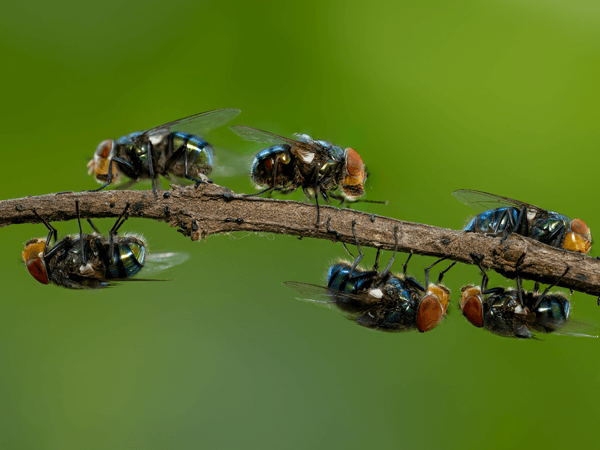
- Distinguishing features: Sluggish, slow flight; checkerboard pattern on the abdomen; wings overlap at rest
- Behavior: Aggregates in large groups on sunny windows and walls; emerges on warm days; doesn't bite
Why You're Seeing Them
Cluster flies have an unusual life cycle that makes them seasonal indoor pests:
- Summer: larvae develop inside earthworms in soil
- Late summer/early fall: adult flies emerge and seek protected places to overwinter
- Fall: they enter attics, soffits, wall voids, and other dark, protected spaces
- Winter: they remain inactive in clusters, sometimes thousands together
- Warm winter days or early spring: they become active and try to get back outside
- Spring: surviving flies leave to breed; cycle restarts
Buildings that attracted cluster flies last fall attract them again the next fall. Once a building becomes a cluster fly site, the problem typically returns year after year unless entry points are sealed.
Where You Find Them in Coastal NC
- Attics, especially around gable vents and soffits
- Wall voids accessed through small exterior gaps
- Around west and south-facing windows (sunny exposure attracts them)
- Behind window frames and door frames
- In rarely used rooms, attics, and second floors
- Around eaves, soffits, and roof returns from the outside
In coastal NC’s mild winters, cluster flies may be active more often than in northern climates. Warm spells in January and February can produce indoor activity.
Signs of an Infestation
- Large numbers of sluggish flies on windows in late winter or early spring
- Flies appearing in groups indoors with no visible breeding source
- Dead flies accumulating on windowsills, in light fixtures, and along baseboards
- Buzzing sounds in walls or attics on warm days
- History of fly problems in the same months, year after year
Healthy Home’s protection plans cover all fire ant species under one service.
Why They Matter
- Annual recurrence: Without exclusion, cluster flies return to the same building every fall
- Population scale: Thousands of flies can overwinter in a single attic
- Visual nuisance: Slow flies aggregating on windows and walls are persistent and unsettling
- Dead fly accumulation: Dead flies build up over winter, attracting carpet beetles and other secondary pests
- Not a disease vector: Cluster flies don't breed in waste and don't spread disease the way house flies do
How Healthy Home Treats Cluster Flies
Cluster fly control is seasonal and targets the entry rather than the flies themselves. Healthy Home covers cluster flies under every protection plan.
- Late summer/early fall treatment of eaves, soffits, gable vents, and exterior walls before adults seek overwintering sites
- Entry point sealing, where feasible, to reduce next year's infestation
- Indoor treatment when active flies emerge in spring
- Vacuum out dead fly accumulation as needed during inspection
- Ongoing quarterly maintenance to maintain the treated perimeter
How to Prevent Cluster Flies
- Seal gaps around soffits, gable vents, and roof returns before fall
- Install fine mesh screens on attic vents
- Repair damaged siding, window frames, and door frames
- Seal cracks where utility lines penetrate exterior walls
- Caulk around window and door frames
- Address any large lawn or pasture areas adjacent to the home (cluster flies breed in soil-dwelling earthworms)
Covered Under:
- Home + Yard Protection ($935/year)
- Home + Mosquito Protection ($1,250/year)
- Ultimate Protection Plan ($1,545/year)
- Essential Home Protection (does not include yard treatment)
Frequently Asked Questions
Almost certainly cluster flies. They enter attics, wall voids, and other protected spaces in fall to overwinter, then emerge in groups on warm winter and early spring days. They’re looking for a way out, which often brings them into living areas.
Cluster fly larvae develop in earthworms in soil during summer. Adults overwinter in homes and other structures, entering through gaps in soffits, gable vents, and roof lines. They come back to the same buildings year after year.
Yes, under every protection plan. Treatment focuses on late summer/early fall exterior application (when adults seek overwintering sites) and indoor treatment when active flies emerge.
New generations from outdoor populations, yes. The flies from the previous winter have died. But once a building becomes a known site, new adults return each fall to overwinter in the same structure. Sealing entry points and treating before fall arrival breaks the cycle.
Warm surfaces wake them up. South- and west-facing windows get the most sun, so they are the first to see indoor cluster fly activity on warm winter days. Cooler sides of the home rarely show activity.
Adult flies are addressed quickly, but full elimination depends on resolving the source. If the source is a plumbing leak, the fly issue won’t fully resolve until the leak is fixed. Plan for 2 to 4 weeks of follow-up once the source has been addressed.