

Yellow Jackets
Yellow jackets are the most aggressive stinging insect in coastal North Carolina. They build hidden nests (most often in the ground, sometimes in wall voids or attics) and defend them with overwhelming force. A single colony can hold 1,000 to 5,000 workers by late summer, and disturbing the nest can result in dozens of stings in seconds.
Most yellow jacket attacks happen because nobody knew the nest was there. Mowing the lawn, trimming a hedge, or stepping off a path in August is how most coastal NC homeowners discover their first colony.
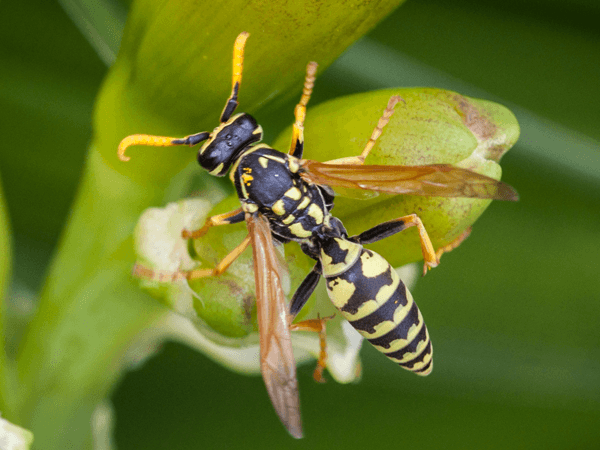
How to Identify a Yellow Jacket
- Size: about ½ inch long. Smaller than a paper wasp, similar in size to a honey bee.
- Body: Smooth, hairless, with the classic narrow wasp waist.
- Color: bright, sharply-defined yellow and black bands across the abdomen, with no fuzz and no orange tints.
- Legs: short legs held tight to the body in flight (paper wasps dangle their legs; yellow jackets don't).
- Flight: fast, darting, often hovering close to food and drinks at outdoor gatherings.
Yellow Jacket vs. Honey Bee
This is a common identification mix-up because of similar size and coloring:
- Honey bee: fuzzy body, golden-brown coloring, gentle behavior, dies after stinging once.
- Yellow jacket: smooth body, bright yellow and black, aggressive near the nest, stings repeatedly.
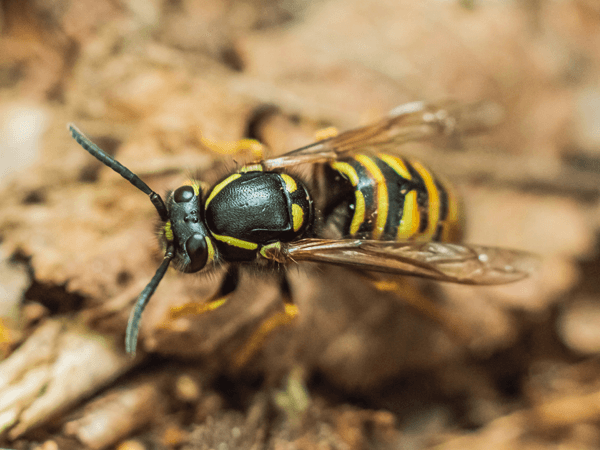
Where Yellow Jackets Nest
Yellow jackets build enclosed paper nests in cavities. The nest itself looks like layered gray paper, but it’s almost always hidden from view inside a void.
Most Common Nest Locations in Coastal NC
- Ground nests: abandoned rodent burrows, drainage channels, holes beneath stones, hollow spaces under tree roots.
- Wall voids: inside exterior walls, accessed through gaps around utility penetrations, siding seams, or weep holes.
- Attics and soffits: especially in older homes where the soffit-fascia junction has gaps.
- Sheds and outbuildings: inside wall cavities, under floorboards, or in dense stored materials.
Why Yellow Jackets Are Dangerous
Three things make yellow jackets the most medically significant stinging insect in the region:
1. They Sting Repeatedly
Unlike honey bees, yellow jackets don’t lose their stinger after a single sting. Each wasp can deliver venom multiple times in rapid succession, and the colony defends as a coordinated mob.
2. They Mark You with Pheromones
Once a yellow jacket attacks, it releases a chemical that signals other wasps to attack the same target. Running away helps but doesn’t break the marking, and many people are pursued 50 to 100 feet from the nest.
3. Late-Summer Aggression
From early August through the first frost, yellow jacket colonies are at peak population, and food sources are dwindling. Workers become aggressive scavengers, and this is when outdoor picnics, garbage cans, and sweet drinks turn into stinging hazards.
Safety note: If you are stung and the yellow jackets are following, run in a straight line to an indoor shelter or a vehicle. Do not jump into the water; yellow jackets will wait at the surface. Anyone with a known wasp allergy needs immediate medical care after any sting.
Signs of a Yellow Jacket Nest
- Heavy, repeated traffic of yellow-and-black wasps in and out of a single hole in the lawn or landscape
- Wasps disappearing into a crack or weep hole in an exterior wall
- A faint papery rustling or buzzing sound from inside a wall or attic
- Increased wasp activity around trash cans, pet food bowls, and outdoor picnic tables
- Wasps suddenly emerge when a mower, weed trimmer, or vibration disturbs a specific spot in the yard
Treatment & Removal
Yellow jacket removal is one of the few pest jobs that should always be done professionally. The combination of large colony size, aggressive defense, hidden nest location, and repeat-sting risk makes DIY treatment genuinely dangerous.
Step 1: Locate the Nest Entrance
Technicians observe traffic patterns to identify the exact nest entry point. Wall voids and attic nests often have entry points that are several feet from the actual nest cavity, which is why DIY sprays into a wall typically miss the colony entirely.
Step 2: Direct Treatment at the Entrance
A dust formulation product is applied directly to the nest entrance at dawn or dusk. Foraging wasps carry the dust into the nest, where it reaches the queen and brood. This works in voids that a spray cannot penetrate.
Step 3: Confirm Knockdown and Seal Entry
A follow-up visit confirms that no remaining activity is present. The entry point is then sealed, which is particularly important for wall and attic nests, where leaving the cavity open invites a new colony the following year.
Wall and attic nests should never be sealed before treatment. Sealing live wasps inside the void forces them to find a new exit, often into the living space.
Preventing Yellow Jackets
- Inspect the yard for ground holes each spring; fill in abandoned rodent burrows before nesting season
- Seal exterior gaps (weep holes, utility penetrations, soffit-fascia gaps, deck attachment points)
- Keep outdoor trash cans tightly covered and rinse soda cans before recycling, especially in August
- Cover food and sweet drinks during outdoor meals from August through the first frost
- Watch for traffic patterns before mowing or trimming in late summer; five seconds of observation can prevent a hospital visit
Frequently Asked Questions
By August, the colony is at peak size (sometimes thousands of workers) and the queen has stopped laying new workers. The colony’s natural food sources are running out, prompting workers to scavenge and making them more confrontational toward any perceived competitors for food.
Gasoline, boiling water, and home remedies are all dangerous and largely ineffective. The nest cavity often extends several feet from the entrance, and a partial kill leaves an aggressive surviving colony. Professional dust treatment reaches the queen directly.
In most cases, no. Colonies die off after the first hard frost, and only newly mated queens overwinter. However, the location itself is often reused because the cavity has already been proven viable, which is why sealing the entry after treatment matters.
For someone without an allergy, a few stings are painful but not life-threatening. Twenty or more stings (common in nest attacks) can cause systemic toxic reactions and warrant emergency care regardless of allergy status. Anyone with a known wasp allergy should seek immediate care after even a single sting.
Do not seal the entry, do not spray into the void, and do not panic. Call for professional treatment. Wall void nests are routine to handle correctly, but dangerous to handle incorrectly, since the colony can chew through interior drywall if the exterior exit is blocked.
Plan Coverage
Yellow jacket nest treatment, including ground and wall void nests, is included on Home + Yard, Home + Mosquito, and Ultimate Protection Plans. Repeat visits during late-summer peak season are part of standard quarterly service.