

Chiggers in Coastal Southeastern North Carolina
Chiggers are the larval stage of harvest mites, and they’re responsible for some of the most miserable bites you can pick up in a coastal NC summer. They live in tall grass, brushy yard edges, and overgrown areas, then climb onto whatever passes through. The bites don’t appear immediately; you usually feel them hours later as intensely itchy red welts clustered around tight clothing lines. By the time you notice, the chiggers themselves are long gone.
Despite what almost everyone believes, chiggers don’t burrow under your skin. We’ll get to that.
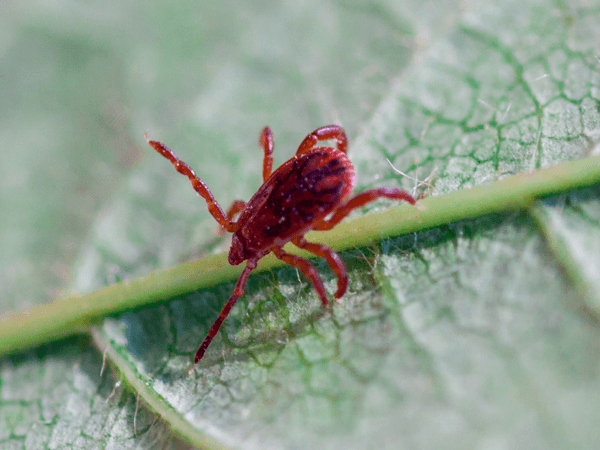
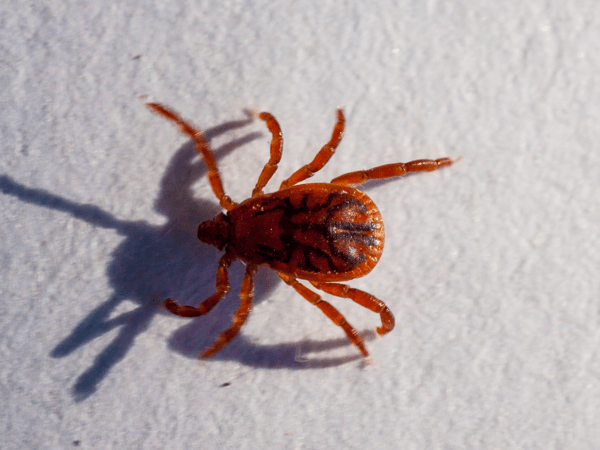
Quick Identification
- Size: About 1/150 inch (essentially invisible without magnification)
- Color: Bright red to reddish-orange (larval stage)
- Distinguishing features: Six legs in the biting larval stage (eight legs as adults, but adults don't bite). You will almost never see the chigger that bit you.
- Where they bite: Around tight clothing lines: sock tops, waistbands, bra lines, groin area
The Truth About How Chiggers Bite
Almost every American believes chiggers burrow into your skin and have to be dug out. This is false. Here’s what actually happens:
- A chigger larva climbs onto your skin from tall grass or brush.
- It crawls up the body until it hits a barrier (waistband, sock top, tight clothing).
- It injects saliva containing enzymes that dissolve a small amount of skin tissue.
- It feeds on the dissolved tissue for several hours, then drops off.
- The bump and intense itching come from your body's immune reaction to the saliva, not from the chigger being inside you.
Trying to suffocate them with nail polish, bleach, or alcohol does nothing. They left hours before you started itching. The only thing you’re doing is irritating your skin further.
Where You Find Them in Coastal NC
Chiggers thrive in transitional habitats where tall vegetation meets shorter grass:
- Yard edges where lawn meets woods, brush, or fields
- Tall grass, weeds, and overgrown garden beds
- Around ponds, ditches, and damp wooded areas
- Wooded paths and brushy trails
- Berry patches and dense ground cover
They are most active in summer (June through September in coastal NC) and prefer the warm, humid conditions our region offers from late spring through early fall.
Signs of an Infestation
- Itchy red welts appearing in clusters several hours after time outdoors
- Bites concentrated around sock lines, waistband, bra line, or other tight-clothing areas
- Bites on multiple family members or pets after the same outdoor activity
- Intense itching that peaks 24 to 48 hours after exposure and can last 1 to 2 weeks
- Bite locations that don't match mosquito (random, exposed skin) or tick (single, larger, often attached) patterns
Why They Matter
Chiggers don’t transmit disease to humans in North Carolina. Their impact is quality of life:
- Severe itching: Bites can disturb sleep and remain itchy for 1 to 2 weeks
- Yard avoidance: Heavy chigger populations make using your own yard miserable
- Misdiagnosis risk: Bites are often blamed on mosquitoes or 'something biting in the bed,' delaying real treatment
- Risk to kids and pets: Children playing in grass and dogs wandering through brush get heavily exposed
How Healthy Home Treats Chiggers
Chigger control is yard-focused. The treatment kills both active larvae and the eggs they came from, while quarterly maintenance prevents re-establishment from neighboring properties or wooded edges.
Treatment includes:
- Targeted yard application in tall grass, brush edges, and any spot where children or pets play
- Perimeter treatment where lawn meets woods or unmaintained areas
- Quarterly maintenance during summer chigger season
How to Prevent Chigger Bites
- Wear long pants tucked into socks when walking through tall grass
- Apply DEET or permethrin-treated clothing for high-risk outdoor activities
- Shower immediately after time in chigger habitat to wash off any larvae still climbing
- Keep grass cut short and yard edges trimmed back from tall vegetation
- Treat the yard quarterly during summer to break the chigger life cycle
Covered Under:
- Home + Yard Protection ($935/year)
- Home + Mosquito Protection ($1,250/year)
- Ultimate Protection Plan ($1,545/year)
- Essential Home Protection (does not include yard treatment)
Frequently Asked Questions
No. This is a common myth. Chiggers attach to the skin (often near tight clothing), inject saliva that dissolves skin cells, and feed on the dissolved tissue. They drop off within hours. The itching that follows is your body reacting to the saliva, not the chigger still being there.
Around tight clothing: sock lines, waistband, bra line, and groin area. Chiggers crawl up the body until they hit a tight spot, then stop and feed.
Yes, under Home + Yard, Home + Mosquito, and Ultimate Protection Plans, all of which include yard treatment. Essential Home Protection does not include yard service.
There’s no chigger to kill; they leave within hours of biting. Nail polish, bleach, and similar remedies don’t do anything except irritate your skin further. Hydrocortisone cream and oral antihistamines are the most effective relief options.
No. Chiggers can’t survive on indoor surfaces and don’t reproduce inside. Any chigger that gets indoors on clothing dies within hours. Indoor ‘chigger bites’ are almost always something else (often rodent mites, see our Rodent Mites page).