

Weevils in Coastal Southeastern North Carolina
Weevils are a large family of beetles distinguished by a long snout. The species that matter for homeowners are pantry weevils, which infest stored grains, rice, flour, and pasta. They often arrive in newly purchased food and emerge from grains where eggs were laid weeks or months earlier.
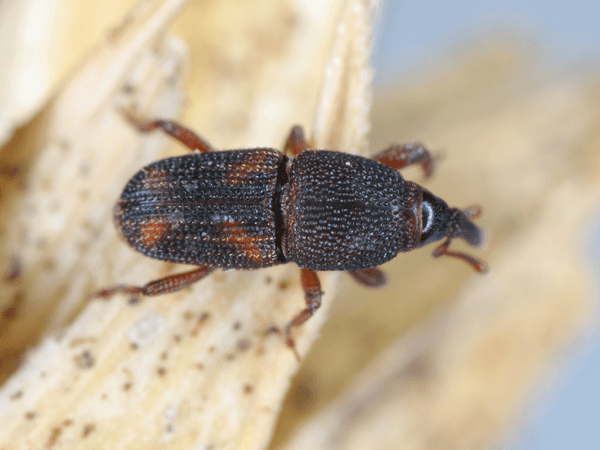
How to Identify Weevils
- Size: 1/8 to 1/4 inch
- Color: Reddish-brown to black
- Distinctive feature: Elongated snout (rostrum) extending from the head
- Common pantry species:
- Rice weevil (small dark brown with four light spots)
- Granary weevil (uniform reddish-brown, no flight wings)
- Maize weevil (dark brown with reddish marks)
The long snout is the universal weevil identifier. No other small beetles indoors have this feature.
How They Infest Food
The life cycle explains why sealed packages don’t prevent infestations:
- Adult female chews a small hole in a grain (rice, wheat, corn kernel)
- She lays an egg inside, then seals the hole
- The egg hatches into a larva that develops inside the grain
- After 4 to 6 weeks, an adult emerges through the grain's surface
By the time you see adult weevils, the eggs were laid before the grain was packaged. This is why weevils often appear in newly opened products.
How to Tell Black from Red Imported
Some description text for this item
The two species look similar at a glance, behave identically, and sting just as painfully.
The reliable identifier is color:
| Feature | Red Imported | Black | Hybrid |
|---|---|---|---|
| Color | Reddish-brown head/thorax, darker abdomen | Uniformly dark brown to black | Intermediate, variable |
| Range in coastal NC | Dominant species | Extremely rare | Extremely rare |
| Mound appearance | Dome-shaped, loose soil | Same dome shape | Same dome shape |
| Sting | Severe, painful | Severe, painful (identical) | Severe, painful (identical) |
| Treatment approach | Bait + direct mound treatment | Same as RIFA | Same as RIFA |
If you’re in coastal NC and have fire ants, the simplest explanation is correct: they are Red Imported.
Visit the Red Imported Fire Ant page for full identification details, sting information, and treatment specifics.
Common Infested Foods
- White rice and brown rice
- Wheat flour and whole wheat flour
- Corn meal and grits
- Pasta and macaroni
- Whole grains (oats, barley, quinoa)
- Bird seed and pet food
- Dried beans (less common)
How Healthy Home Treats Weevils
Weevils are covered under all four annual protection plans. Treatment combines:
- Inspection of all stored grain products
- Recommendations for discarding infested items
- Residual treatment in pantry harborage points
- Storage recommendations (sealed glass or hard plastic, freezing bulk grains for 3-4 days before storage)
- Quarterly follow-up
Covered Under:
- Home + Yard Protection ($935/year)
- Home + Mosquito Protection ($1,250/year)
- Ultimate Protection Plan ($1,545/year)
- Essential Home Protection (does not include yard treatment)
Frequently Asked Questions
Weevils are small beetles with a distinctive long snout (called a rostrum). The species commonly found indoors are pantry weevils, especially rice weevils, granary weevils, and maize weevils. These infest stored grains, flour, rice, pasta, and similar dry goods. Outdoor weevil species can also wander into homes but don’t infest food.
Weevils almost always arrive in stored grains already infested at the source. Adult females lay eggs inside individual grains, where the eggs hatch and develop. By the time you see adult weevils emerging, the eggs were laid weeks or months earlier. Sealed packaging doesn’t prevent this because the eggs were inside the grain before packaging.
Discard all infested food items, vacuum pantry shelves thoroughly, and check all stored grain products even if they appear uninfested. Replacement items should be stored in airtight glass or hard plastic containers, and bulk grain purchases can be frozen for 3-4 days to kill any eggs before storage. Professional treatment targets pantry harborage areas.