

Asian Cockroaches in Coastal Southeastern North Carolina
Asian cockroaches are nearly identical in appearance to German cockroaches but behave very differently. They fly readily, are strongly attracted to lights, and live primarily outdoors. They’re a common nuisance around lit porches and outdoor entertainment areas in coastal NC, especially during summer evenings.
The most important thing to know about Asian cockroaches: they’re not German roaches. Treatment, severity, and approach are all different.
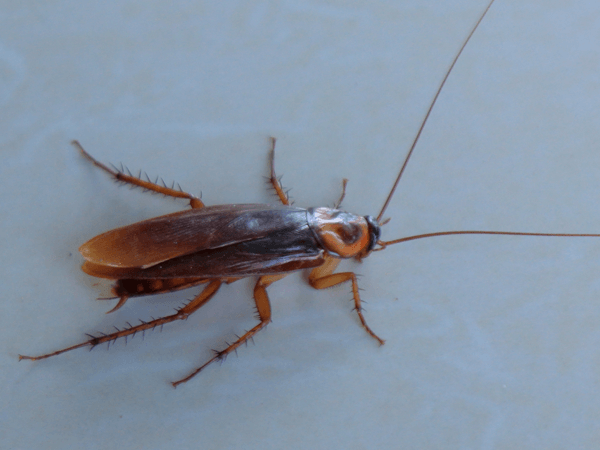
How to Identify Asian Cockroaches
- Size: About 1/2 inch (same as German cockroach)
- Color: Light brown with two dark stripes behind the head (same as German cockroach)
- Wings: Both sexes have fully developed wings; both fly
- Behavior: Active at night, strongly attracted to lights, primarily outdoor
- Key identifier: Behavior, not appearance. If it flies toward lights and lives outdoors, it's an Asian cockroach. If it hides indoors and avoids light, it's a German cockroach.
The long antennae and erratic movement together are reliable identifiers.
Where They Live
Asian cockroaches live outdoors in:
- Leaf litter and mulch
- Lawn areas
- Around shrubs and ornamental plants
- Compost piles
- Outdoor stored materials
They come indoors by:
- Flying toward indoor lights through open doors
- Following indoor light when porches are lit
- Occasionally entering through window screens with gaps
Unlike German cockroaches, Asian cockroaches don’t establish indoor populations. They’re flyers that wander in rather than residents that breed inside.
How to Tell Black from Red Imported
The two species look similar at a glance, behave identically, and sting just as painfully.
The reliable identifier is color:
| Feature | Red Imported | Black | Hybrid |
|---|---|---|---|
| Color | Reddish-brown head/thorax, darker abdomen | Uniformly dark brown to black | Intermediate, variable |
| Range in coastal NC | Dominant species | Extremely rare | Extremely rare |
| Mound appearance | Dome-shaped, loose soil | Same dome shape | Same dome shape |
| Sting | Severe, painful | Severe, painful (identical) | Severe, painful (identical) |
| Treatment approach | Bait + direct mound treatment | Same as RIFA | Same as RIFA |
If you’re in coastal NC and have fire ants, the simplest explanation is correct: they are Red Imported.
Visit the Red Imported Fire Ant page for full identification details, sting information, and treatment specifics.
Why the Distinction Matters
Confusing Asian cockroaches with German cockroaches leads to wasted money. German roach treatment is $495 initial plus $295 per follow-up. Asian roach treatment is included in standard annual protection plans starting at $540 per year. If you’re seeing small striped roaches near lit windows and porches in summer, you almost certainly don’t need specialty German roach treatment.
The simplest field test: does the roach fly toward lights? German cockroaches almost never do. Asian cockroaches always do.
How Healthy Home Treats Asian Cockroaches
Asian cockroaches are covered under all four annual protection plans. Treatment combines:
- Exterior perimeter and landscaping treatment
- Treatment of harborage areas (mulch, leaf litter, dense plantings)
- Recommendations for outdoor lighting adjustments (yellow bug bulbs are less attractive)
- Quarterly follow-up to maintain pressure
Covered Under:
- Home + Yard Protection ($935/year)
- Home + Mosquito Protection ($1,250/year)
- Ultimate Protection Plan ($1,545/year)
- Essential Home Protection (does not include yard treatment)
Frequently Asked Questions
Asian and German cockroaches look nearly identical. Both are small, light brown, with two dark stripes behind the head. The key difference is behavior. Asian cockroaches fly readily and are strongly attracted to lights, while German cockroaches almost never fly and avoid light. If you’re seeing small roaches flying around outdoor lighting, they’re almost certainly Asian cockroaches.
No. Asian cockroaches are primarily outdoor pests and are covered under standard annual protection plans. German cockroaches are indoor pests that require a specialty treatment program because of their rapid reproduction and resistance to standard pesticides. The distinction between the two species matters significantly for treatment approach.
Asian cockroaches live primarily outdoors but are attracted to lights at night. They often fly toward lit windows, porches, and patios, then end up inside homes when doors open. Unlike German roaches, they don’t establish indoor populations. They’re more nuisance fliers that wander in rather than colonizing residents.