

Black Widow Spiders in Coastal Southeastern North Carolina
Black Widows are one of two medically significant spider species in coastal NC (the other is the Brown Recluse). They’re shiny, black, and unmistakable once you see the red hourglass marking on the underside. The good news is they’re not aggressive, don’t hunt down humans, and avoid disturbed areas. The bad news is that their venom is genuinely dangerous, and the places they prefer to live (woodpiles, sheds, garages, storage spaces) are exactly the places where homeowners accidentally encounter them.
Black Widows exist in coastal NC, but they’re less common than in southwestern states. You’re far more likely to encounter a wolf spider, house spider, or jumping spider than a Black Widow. That said, when you do find one, it deserves respect and careful removal.
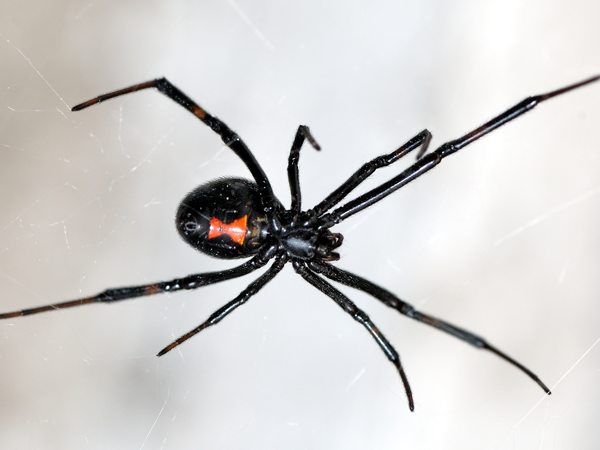
Quick Identification
- Size: Females about 1/2-inch body; with legs, 1.5 to 2 inches across. Males are much smaller (about 1/4 the size of females).
- Color: Females are glossy black; males are tan or brown with reddish or yellow markings
- Distinguishing features: Red hourglass marking on the underside of the abdomen (sometimes broken into two triangles or replaced by red dots in some individuals)
- Body shape: Female has a large, round, shiny abdomen with relatively thin legs; very distinct from other spiders
- Web type: Irregular tangled web in dark sheltered spots; not the geometric circular web of orb weavers or the messy corner cobweb of house spiders
Where You Find Them in Coastal NC
Black Widows prefer dark, dry, undisturbed locations:
- Woodpiles and stored firewood
- Sheds, detached garages, and outbuildings
- Underneath outdoor furniture, especially when not used regularly
- Inside outdoor electrical boxes, water meters, and irrigation valve boxes
- Around foundation vents, crawl space openings, and basement corners
- Inside abandoned bird and rodent burrows
- Garage corners, especially behind stored items
Black Widows almost never live in the main living areas of homes. They prefer cool, dark, undisturbed spaces. If you have a Black Widow inside your house, it almost certainly wandered in from the garage or basement and hasn’t established a population.
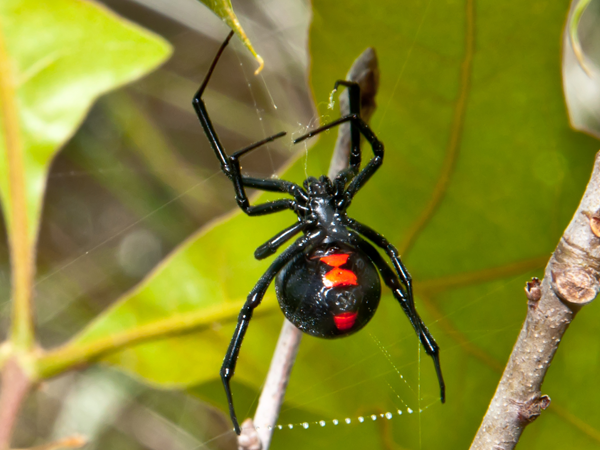
Why They Matter
- Medically significant venom: Contains latrotoxin, which affects the nervous system. Bites cause severe pain, muscle cramps, and systemic symptoms.
- Risk to vulnerable populations: Children, elderly people, and immunocompromised individuals face a significantly higher risk. Pets (especially cats) are also vulnerable.
- Hidden habitats: They live exactly where homeowners reach without looking - under outdoor furniture cushions, inside woodpiles, in shed corners
- Hard to spot: Black Widows are reclusive and hide during the day. Encounters typically happen when someone disturbs their hiding spot.
Black Widow Bite Symptoms
Bites cause progressively serious symptoms:
- Within minutes: Sharp pain at the bite site; two small red puncture marks may be visible
- Within 30 to 60 minutes: Pain spreads to the abdomen and back; muscle cramps begin
- Within 1 to 8 hours: Severe muscle pain, sweating, nausea, headache, elevated blood pressure
- Without treatment: Symptoms peak at 12 hours and gradually subside over 3 to 5 days
- Mortality: Death is rare in healthy adults with modern medical care. Higher risk in children, the elderly, or untreated cases.
Anyone who suspects a Black Widow bite should seek medical attention immediately. Antivenom exists and is highly effective.
How Healthy Home Treats Black Widows
Black Widow control combines treatment of harborage areas with reducing the conditions that attract them. Healthy Home covers Black Widows under every protection plan.
Treatment includes:
- Inspection of high-risk areas: garages, sheds, woodpiles, foundation perimeters, crawl spaces
- Targeted application in undisturbed corners and harborage spots
- Web removal where Black Widows have established themselves
- Perimeter treatment to prevent new individuals from establishing
- Homeowner guidance on reducing harborage (relocating woodpiles, organizing storage, etc.)
How to Reduce Black Widow Risk
- Wear gloves when moving firewood, working in sheds, or rearranging stored items
- Shake out shoes, gloves, and clothing left in garages or sheds before putting them on
- Keep woodpiles at least 20 feet from the house and elevated off the ground
- Reduce clutter in garages, sheds, and basements
- Check outdoor electrical and water meter boxes carefully before reaching in
- Don't reach into dark spots blindly; use a flashlight first
- Sweep down webs in undisturbed areas regularly
Covered Under:
- Home + Yard Protection ($935/year)
- Home + Mosquito Protection ($1,250/year)
- Ultimate Protection Plan ($1,545/year)
- Essential Home Protection (does not include yard treatment)
Frequently Asked Questions
Yes. Black Widows are found throughout North Carolina, including coastal NC. They’re uncommon but present, typically in undisturbed outdoor spaces like woodpiles, sheds, garages, and storage areas.
Medically significant but rarely fatal in healthy adults. Symptoms can include severe muscle pain, cramps, sweating, nausea, and elevated blood pressure. Children, elderly people, and immunocompromised individuals face a higher risk. Anyone who suspects a Black Widow bite should seek medical attention immediately.
Yes, under every protection plan. We treat harborage areas where Black Widows typically live, such as woodpiles, sheds, garages, crawl spaces, and undisturbed corners. Quarterly service prevents establishment in these areas.
Seek medical attention immediately. Don’t wait to see if symptoms develop. Call (910) 540-1030 only after seeking medical care; we can address the spider issue at the property after you’ve been treated.
Male Black Widows have venom, but their fangs are too small to effectively penetrate human skin. Bites from males are extremely rare and usually produce only minor symptoms. The danger is from females.
The red hourglass marking on the underside of the abdomen is unique. Other dark spiders in coastal NC don’t have this marking. If you see a glossy black spider with a red hourglass mark, it’s a Black Widow.