

Yellow Sac Spiders in Coastal Southeastern North Carolina
Yellow Sac Spiders cause more confirmed spider bites in the United States than any other species. They’re not in the same league as Black Widows or Brown Recluses for danger, but they’re far more common in coastal NC homes and far more likely to bite a human. If you’ve ever been bitten by a spider, you didn’t see and developed a small red blister that took a week to heal, it was probably a Yellow Sac Spider.
They’re easy to overlook because they’re small, pale, and quiet. Most homeowners never notice them until they get bitten or find one in their car.
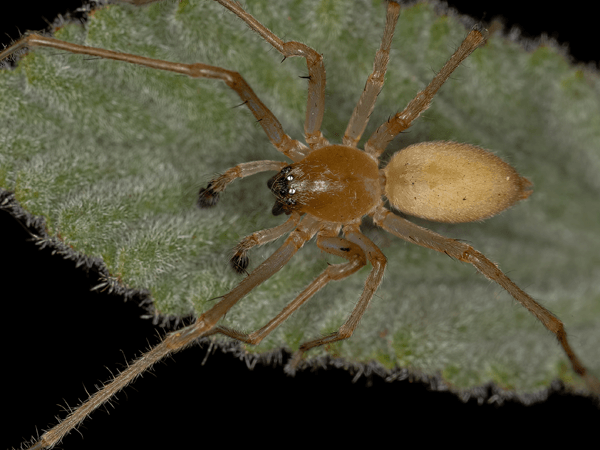
Quick Identification
- Size: Body about 1/4 inch; with legs, about 1/2 inch across
- Color: Pale yellow to light beige; sometimes with a slight greenish tint or darker tips on the front legs
- Distinguishing features: Pale uniform color (no patterns); long thin legs; dark facial chelicerae (mouthparts) that stand out against the pale body
- Behavior: Active hunter at night; builds small silken retreat sacs in corners during the day; doesn't build webs to catch prey
Why You'll Encounter Them
Yellow Sac Spiders are unusually mobile compared to other indoor spiders. They wander widely at night searching for prey, which puts them in places homeowners contact regularly:
- Inside clothing left on the floor or in closets
- Between bed sheets
- Inside shoes
- Inside cars (a common surprise; they enter through gaps and travel along ceilings)
- Behind picture frames and around ceiling corners
- On walls and ceilings in dim lighting
They retreat to small silken sacs in upper corners during the day. These sacs look like small white papery balls and are the easiest way to spot them.
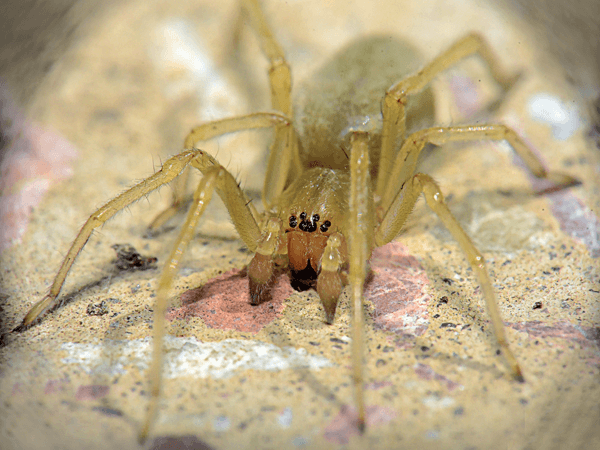
Where You Find Them in Coastal NC
- Ceiling corners and along walls in living rooms, bedrooms, and offices
- Behind furniture, curtains, and picture frames
- Inside cars (especially in garages or driveways)
- On outdoor walls and porches at night
- In gardens, on vegetation, and around outdoor lighting
- In garages, basements, and storage areas
Yellow Sac Spider Bites
Yellow Sac Spider bites are the source of many ‘I was bitten by a spider’ stories:
- How bites happen: Usually defensive bites when the spider is trapped against skin in clothing, bedding, or while moving furniture
- Initial symptoms: Sharp burning pain at the bite site; a small red mark may form
- Within hours: Redness, swelling, and itching; sometimes a small blister forms
- Within days: Blister may rupture, leaving a small wound that takes 7 to 10 days to heal
- Rare systemic symptoms: Some people experience mild nausea, fever, or muscle cramps; severe reactions are uncommon
- Brown Recluse misdiagnosis: Yellow Sac Spider bites often look like and are diagnosed as Brown Recluse bites. Statistical odds heavily favor Yellow Sac in coastal NC.
Why They Matter
- Bite frequency: Most common biting spider in coastal NC homes; far more bites occur than from Black Widows, Brown Recluses, or any other species
- Mobility: They wander into clothing, bedding, and cars where contact is unavoidable
- Misdiagnosis risk: Bites are commonly mistaken for Brown Recluse bites, leading to unnecessary alarm
- Wide presence: Found in nearly every coastal NC home, even though most homeowners don't notice them
How Healthy Home Treats Yellow Sac Spiders
Yellow Sac Spider control combines interior treatment with reducing the entry points that bring them in. Healthy Home covers Yellow Sac Spiders under every protection plan.
- Inspection of ceiling corners, behind furniture, and high-activity areas
- Targeted application in corners and along ceilings where they build retreats
- Perimeter treatment to reduce entry from outdoor populations
- Web/sac removal during inspection
- Quarterly maintenance to keep populations from re-establishing
How to Reduce Yellow Sac Spider Bites
- Don't leave clothing on the floor; shake out garments before putting them on
- Pull back bedding before getting in; inspect sheets, especially if you've slept elsewhere recently
- Shake out shoes before wearing them
- Reduce outdoor lighting near doors and windows (light attracts spiders' prey)
- Seal gaps around windows, doors, and utility penetrations
- Sweep down silken retreat sacs in ceiling corners during regular cleaning
- Check car interiors for silken sacs around door frames and ceiling areas, especially after the car has sat unused
Covered Under:
- Home + Yard Protection ($935/year)
- Home + Mosquito Protection ($1,250/year)
- Ultimate Protection Plan ($1,545/year)
- Essential Home Protection (does not include yard treatment)
Frequently Asked Questions
Bites are painful and can cause localized symptoms (redness, swelling, blistering), but aren’t life-threatening for healthy adults. Most bites heal within 7 to 10 days. They’re often misdiagnosed as Brown Recluse bites because of similar local symptoms.
Yellow sac spiders are more bite-prone than most spiders, especially when accidentally trapped in clothing or bedding. They bite to defend themselves when pressed against the skin. Many bites occur at night, when the spider gets between the sheets or into clothing.
Yes, under every protection plan. Treatment includes interior application in high-activity areas (corners of ceilings, around windows) and perimeter treatment to reduce entry.
It’s hard to distinguish based on the bite alone. Both produce small, painful wounds that can blister. The clue is location and probability: Yellow Sac Spider bites are far more common in coastal NC than Brown Recluse bites. If you didn’t see the spider, statistical odds favor Yellow Sac.
Yellow sac spiders are attracted to gasoline fumes (genuinely; this has been studied). They can enter vehicles through small gaps and have been known to clog fuel vapor lines in some car models. Treating around your garage and parking area reduces this.
Wash the bite with soap and water, apply a cold compress for swelling, and use an over-the-counter pain reliever if needed. Watch for signs of infection (worsening redness, pus, increasing pain). Seek medical care if symptoms are severe or if the wound shows signs of secondary infection. Antibiotics may be needed if an infection develops.