

Eastern Gray Squirrel in Coastal Southeastern North Carolina
Eastern Gray Squirrels are part of the normal wildlife of coastal NC, and most homeowners enjoy seeing them in trees and yards. The problem starts when they move into your attic. They damage insulation, chew through wood and wiring, leave droppings and urine in living spaces below, and produce enough noise to wake you up at dawn. Unlike rats, squirrels are active during the day, which means you hear them when you’re trying to use your house.
Once squirrels establish in an attic, they don’t leave on their own. They produce two litters a year in coastal NC, and the young grow up viewing your attic as home territory.
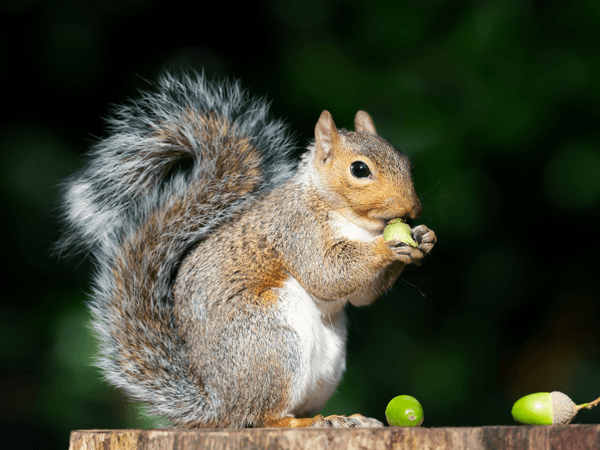
Quick Identification
- Body length: 9 to 12 inches (not counting tail)
- Tail length: 8 to 10 inches; bushy and prominent
- Weight: 1 to 1.5 pounds
- Color: Gray to silver-gray above, white to cream below; some individuals have reddish-brown tints
- Distinguishing features: Bushy upright tail, alert active behavior, white belly, large dark eyes
Where You Find Them in Coastal NC
Eastern Gray Squirrels are everywhere in coastal NC: mature neighborhoods, wooded suburbs, parks, and even denser urban areas with tree cover. They become indoor problems when they enter:
- Attics, especially with soffit gaps or damaged gable vents
- Wall voids near rooflines
- Chimneys, particularly without proper caps
- Soffits and roof returns
- Garages, sheds, and outbuildings
- Crawl spaces (less common; usually only when ground-level access is easy)
They enter via tree branches that overhang or touch the roof, utility lines connecting to the home, and rough siding or trim that they can climb.
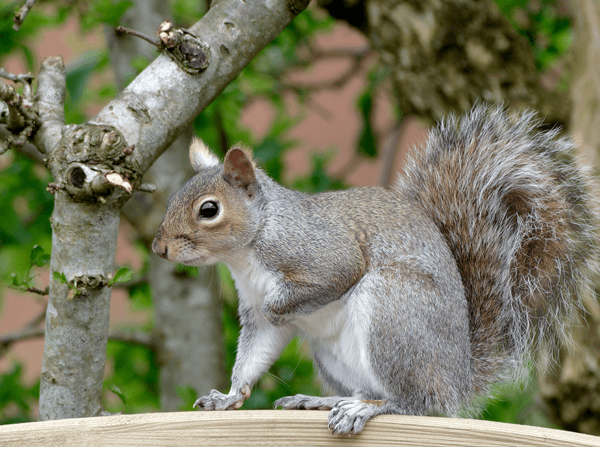
Signs of an Infestation
- Daytime running noises in the attic: Most distinctive sign; squirrels are diurnal
- Heavy bounding and rolling sounds: Especially in the early morning and evening
- Visible damage to soffits, gable vents, or fascia: Chewed wood, enlarged gaps, claw marks
- Droppings: Larger than rat droppings (about 3/8 inch), more rounded, often piled in concentrated areas
- Damaged insulation: Flattened paths, nesting depressions, shredded material
- Stains on ceilings: Urine stains may appear on ceiling drywall below heavily-used areas
- Squirrels seen entering/exiting: Watch the roofline at dawn and dusk for clear confirmation
Why They Matter
- Insulation damage: Squirrels shred and flatten attic insulation, reducing R-value and energy efficiency
- Electrical wire damage: Chewing on wires is a documented fire risk; squirrel-caused fires occur every year
- Structural damage: Continued chewing enlarges entry points, damages soffits, and can compromise rooflines
- Population growth: Females produce 2 litters per year with 2 to 4 young per litter; new generations view the attic as home
- Disease and parasite risk: Squirrels can carry fleas, ticks, and mites that affect humans and pets
- Noise impact: Daytime activity disrupts sleep, work-from-home, and general use of the home
- Trapped young: If adults are trapped or excluded without checking for young, baby squirrels can die in walls or attics, creating odor and contamination issues
How Healthy Home Removes Eastern Gray Squirrels
Squirrel removal requires a careful sequence: confirm activity, identify entry points, remove the squirrels (including young when present), and then permanently seal the entry points. Order matters: sealing entries before all squirrels are out can trap adults in the attic and cause more damage.
- Inspection to confirm species (gray vs flying), locate entry points, and assess for young
- One-way exclusion devices where appropriate, allowing squirrels to leave but preventing re-entry
- Trapping and removal when one-way exclusion is not appropriate (active young in attic, blocked exits, etc.)
- Sealing entry points with hardware cloth, metal flashing, and appropriate sealants on soffits, gable vents, fascia gaps, and other openings
- Insulation assessment after removal: heavily damaged insulation may need replacement
- Habitat modification guidance: trimming branches back at least 6 feet from the roofline, removing climbing pathways
How to Prevent Eastern Gray Squirrels
- Trim tree branches back at least 6 feet from the roof line
- Inspect soffits, gable vents, and fascia annually for gaps or damage
- Install metal screening or hardware cloth over vents
- Cap chimneys with proper rain caps that exclude wildlife
- Repair damaged shingles, fascia, and trim quickly (squirrels enlarge small gaps fast)
- Remove bird feeders if squirrels are a recurring issue (or use proper squirrel-proof feeders)
- Address utility wire entry points that bridge trees to the home
Covered Under:
- Home + Yard Protection ($935/year)
- Home + Mosquito Protection ($1,250/year)
- Ultimate Protection Plan ($1,545/year)
- Essential Home Protection (does not include yard treatment)
Frequently Asked Questions
Squirrels are active during the day; you hear running, bounding, and rolling sounds in daylight hours. Rats are nocturnal and active at night. Squirrels also make heavier, more deliberate sounds; rats make lighter scratching and scampering.
Through gaps in soffits, gable vents, damaged shingles, chimney flashing, or other roof-line openings. They’re strong chewers and can enlarge small gaps into squirrel-sized entries within hours.
Yes, on a case-by-case basis. Squirrel issues aren’t included in standard protection plans but are quoted separately based on the structure and entry points.
No, and this often makes things much worse. Blocking entries while squirrels are inside (especially mothers with young) traps them in the attic, where they cause more damage and can die in walls. Removal must happen before sealing.
Coastal NC sees two main squirrel breeding seasons: late winter (January-March) and mid-summer (June-August). Activity peaks in these windows because females nest in attics to raise young.