

Southern Flying Squirrel in Coastal Southeastern North Carolina
Southern Flying Squirrels are the quiet, nighttime residents most coastal NC homeowners never realize they have. Unlike Eastern Gray Squirrels, which make loud daytime racket, flying squirrels are nocturnal, small, gentle, and live in colonies. They often spend months in an attic before anyone notices. By the time they’re discovered, the colony may have grown to a dozen or more individuals.
They’re charming animals (large dark eyes, soft fur, completely silent flight) but they’re not animals you want sharing your attic. They damage insulation, contaminate spaces with concentrated droppings, and their colonies persist year after year unless properly removed.

Quick Identification
- Body length: 5 to 6 inches (not counting tail)
- Tail length: 3 to 5 inches; flattened and somewhat feather-like
- Weight: 2 to 3 ounces (much smaller than gray squirrels)
- Color: Soft gray-brown above, creamy white below
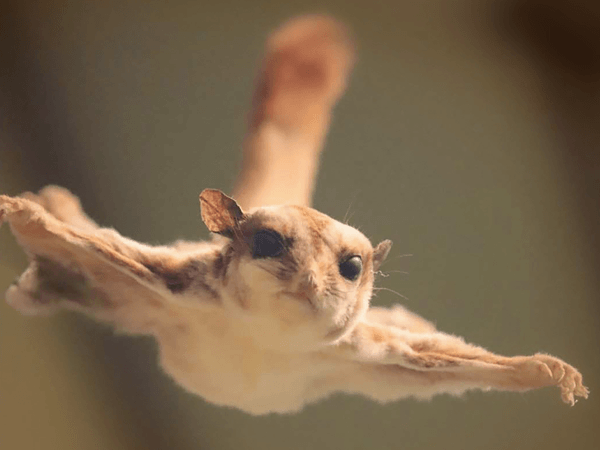
- Distinguishing features: Very large dark eyes (for night vision), loose fold of skin between front and back legs (gliding membrane), small size, soft silent movement
How to Tell Flying Squirrels from Gray Squirrels
- Time of day: Flying squirrels are strictly nocturnal; gray squirrels are diurnal
- Size: Flying squirrels are tiny (chipmunk-sized); gray squirrels are much larger
- Eyes: Flying squirrel eyes are huge and dark for night vision; gray squirrel eyes are normal-sized
- Gliding membrane: Flying squirrels have a fold of skin between legs; gray squirrels don't
- Social behavior: Flying squirrels live in colonies of up to 20 or more; gray squirrels are solitary or in small family groups
- Sound: Flying squirrels are very quiet; gray squirrels make heavy bounding noises
Where You Find Them in Coastal NC
Southern Flying Squirrels are common in mature wooded areas of coastal NC, especially neighborhoods with old oaks, pines, and hardwoods. They become indoor problems when they enter:
- Attics, especially in homes near mature trees
- Soffits and wall voids with small openings
- Chimneys without proper caps
- Bat boxes or wood duck boxes (occasionally)
They access roofs by gliding from nearby trees, which means even homes with trees set back from the structure can be vulnerable. They squeeze through openings as small as 1 inch in diameter, much smaller than gray squirrel entries.
Signs of an Infestation
- Nighttime noises in the attic: Light scampering, small thumps, occasional chirping or chattering sounds at night
- Concentrated droppings: Small, dark, rice-grain to mouse-sized droppings piled in specific 'latrine' areas (flying squirrels are unusually neat for wildlife)
- Strong ammonia smell: Persistent flying squirrel colonies produce noticeable urine odor
- Small entry holes: Often as small as 1 inch in diameter, hard to spot during casual inspection
- Damaged insulation: Nesting depressions and shredded material in specific colony areas rather than spread throughout
- Chewed acorns or nuts: Cached food items in attic corners
- Direct sighting: Rare, but occasionally homeowners spot one gliding from a tree at dusk or dawn
Why They Matter
- Colony scale: Single colonies can grow to 20 or more individuals over time, multiplying impact
- Insulation damage: Heavy concentrated damage in specific areas, often requiring partial insulation replacement
- Health concerns: Concentrated droppings and urine create odor, contamination, and potential pathogen exposure
- Persistence: Colonies use the same attic year after year and even pass it on to next generations if not properly addressed
- Difficult to detect: Often present for many months before homeowners realize
- Electrical wire damage: Like all rodents, flying squirrels gnaw on wiring; documented as a fire risk
How Healthy Home Removes Southern Flying Squirrels
Flying squirrel removal is more complex than gray squirrels because of colony size and small entry points. Standard one-way doors used for gray squirrels often don’t work for flying squirrels.
- Detailed inspection to identify all entry points (often multiple small openings), nest locations, and approximate colony size
- Targeted trapping using specialized small-cage traps appropriate for flying squirrel size
- Multiple-night removal because colony members emerge to forage on different nights
- Exclusion with very fine mesh (1/4 inch or smaller) over vents and openings; standard wildlife exclusion materials often aren't tight enough
- Insulation assessment after removal: colony areas often need replacement and decontamination
- Follow-up inspection to confirm full colony removal
How to Prevent Southern Flying Squirrels
- Inspect soffits and gable vents annually for openings as small as 1 inch
- Install fine metal mesh (1/4 inch) over vents, eaves, and any potential entries
- Cap chimneys with rain caps that exclude small wildlife
- Trim tree branches that overhang or come within gliding distance of the roofline (flying squirrels can glide 30 to 40 feet)
- Address bat box, wood duck box, or other wildlife housing that becomes a stepping-stone to your attic
Covered Under:
- Home + Yard Protection ($935/year)
- Home + Mosquito Protection ($1,250/year)
- Ultimate Protection Plan ($1,545/year)
- Essential Home Protection (does not include yard treatment)
Frequently Asked Questions
No, they glide. They have a fold of skin (called a patagium) that stretches between front and back legs, letting them glide between trees or from tree to roof. They can’t take off or gain altitude the way bats or birds can.
Flying squirrels are nocturnal (active at night), much smaller, and live in colonies of up to 20 or more. Eastern Gray Squirrels are active during the day, larger, and typically solitary or in small family groups. Flying squirrel infestations are often undiscovered for months because they’re quiet and active when most people are asleep.
Yes, on a case-by-case basis. Flying squirrel issues aren’t included in standard protection plans but are quoted separately. Removal is more complex than gray squirrels because they live in colonies and have very small entry points.
Flying squirrel removal typically requires 1 to 2 weeks of trapping because colony members forage on different nights. Full exclusion and damage assessment usually completes within 3 weeks.
Southern Flying Squirrels are not federally protected, but state regulations vary. North Carolina allows removal as a nuisance animal. Northern Flying Squirrels (a different species, not present in coastal NC) are state-endangered in NC. Proper identification is part of every inspection.
Quiet Sounds in the Attic at Night?
Flying squirrel colonies grow quietly and persist for years if not properly removed. We handle full colony removal, exclusion, and damage assessment as a complete service.
RELATED PAGES
Some description text for this item