

Bumble Bee
Bumble bees are large, fuzzy, black-and-yellow pollinators that visit gardens across coastal North Carolina from early spring through fall. They are gentle, beneficial, and protected as critical pollinators, but ground nests in heavily trafficked areas of a yard can be a real hazard for kids, pets, and anyone with a bee allergy.
Most of the time, the right response to a bumble bee is to leave it alone. When a nest is in the wrong place, relocation by a professional is almost always better than extermination.
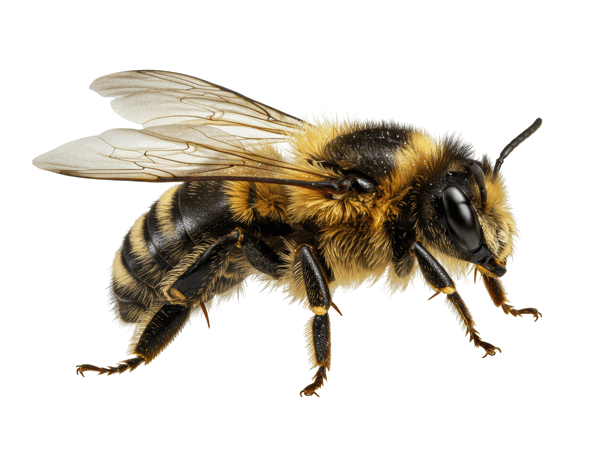
How to Identify a Bumble Bee
- Size: large, roughly ¾ to 1 inch long. Noticeably bigger and rounder than honey bees.
- Body: Robust, oval, and densely covered in soft fuzz across the entire body, including the abdomen.
- Color: Black and yellow bands, though some species have orange or rust-colored patches near the tail.
- Flight: slow, low, and loud, with a deep buzzing hum unlike the higher pitch of a honey bee.
- Behavior: Methodically visits flowers. Not territorial unless a nest is approached.
Bumble Bee vs. Carpenter Bee
This is the most common identification mix-up in coastal NC. The quickest way to tell them apart:
- Bumble bee: Fuzzy abdomen (the rear segment is hairy and yellow/black).
- Carpenter bee: Shiny black abdomen (the rear segment looks bald and glossy).
Behavior is also a giveaway. Carpenter bees hover aggressively around wood eaves and railings; bumble bees travel between flowers and don’t drill into wood.
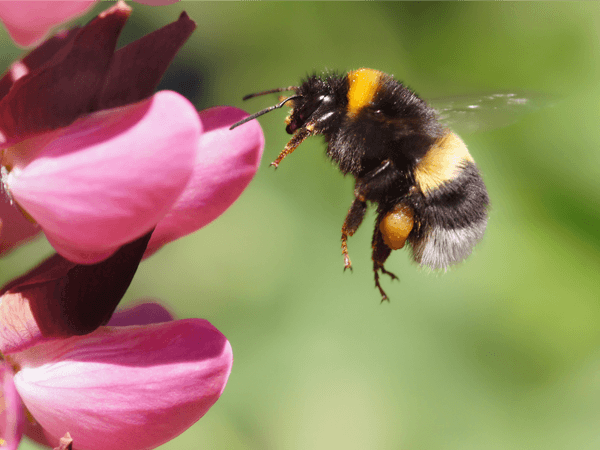
Where Bumble Bees Nest
Bumble bees are ground nesters most of the time, which sets them apart from honey bees (cavity nesters) and carpenter bees (wood borers). A single colony usually houses 50 to 400 bees, much smaller than a honey bee hive.
Common Nest Locations
- Abandoned rodent burrows under sheds, decks, and steps
- Dense leaf litter, mulch piles, and compost heaps
- Hollow areas inside stone walls or under landscape timbers
- Insulation gaps in detached garages and crawlspaces
- Tall, undisturbed grass at the edge of a yard
Are Bumble Bees Dangerous?
Bumble bees are not aggressive away from the nest. Foraging bees on flowers will almost never sting, and you can usually stand within inches of them safely. The risk comes when a nest is directly disturbed, mowed over, or stepped on.
Unlike honey bees, a bumble bee can sting repeatedly without dying. Stings are painful but rarely medically serious unless the person stung has a known bee venom allergy.
When Bumble Bees Become a Problem
- Ground nest located along a walkway, near a pool, or in a children's play area
- Nest discovered during landscaping or lawn work
- Someone in the household has a confirmed bee venom allergy
- Repeated stings to pets investigating the nest
Treatment & Removal
Bumble bees are protected pollinators in many jurisdictions and are always treated as beneficial insects first. Healthy Home’s approach is to evaluate whether the nest can be left alone, relocated, or, only as a last resort, treated.
Step 1: Evaluate
A technician inspects the nest location, foot traffic patterns, and household risk factors (children, pets, allergies). If the nest is in a low-traffic area and the colony will naturally die off in fall, the recommendation is usually to leave it.
Step 2: Exclude or Relocate
If the nest is in a problem location, the preferred path is exclusion: sealing the entry point after the colony has settled for the night and gently encouraging relocation. For larger or higher-risk situations, a local beekeeper may be contacted to attempt a live relocation.
Step 3: Targeted Treatment (Last Resort)
Only when relocation isn’t possible and there’s a real safety hazard, a targeted dust treatment is applied directly to the nest entrance after dark. This avoids broad-area spraying and protects other pollinators visiting the property.
Bumble bee colonies are annual. They die off naturally with the first hard frost. Patience is often the right answer.
Signs of a Bumble Bee Nest
- Steady, low-altitude traffic of large bees coming and going from a single spot on the ground
- A faint hum audible from inside an outbuilding or under a deck
- Bees emerging from a small hole in the lawn or from beneath a stone or step
- Increased bee activity at dusk as foragers return to the nest
Living With Bumble Bees
A few habits keep bumble bees doing what they do best (pollinating the garden) without turning into a hazard:
- Fill in abandoned rodent burrows before spring nesting season starts in March
- Keep mulch piles and leaf debris away from frequently-used walkways
- Mow long grass during the day when bees are foraging away from the nest
- Mark known nest locations and route family traffic around them through summer
- Plant a pollinator garden away from high-traffic zones to draw bees to a safer area
Frequently Asked Questions
Only as a last resort when there is a genuine safety risk, and relocation isn’t possible. Bumble bees are pollinators and are protected. The default recommendation is to leave the colony alone or seal it out and let it relocate.
No. A bumble bee colony lasts a single season. The colony dies off in the fall and only the new queens overwinter, usually in a different location the following spring.
For most people, a bumble bee sting is painful but not medically serious. For anyone with a known bee venom allergy, any sting can be a medical emergency requiring epinephrine and immediate care.
Is the nest in my lawn dangerous to my kids?
It depends on the location. If the entrance is in a high-traffic area, yes, the colony will defend the nest if disturbed. Mark the location, route around it, and call for evaluation.
Plan Coverage
Bumble bee evaluation and exclusion are included in the Home + Yard, Home + Mosquito, and Ultimate Protection Plans. Live relocation, when feasible, may incur an additional fee depending on nest accessibility.