

Carpenter Bees in Coastal Southeastern North Carolina
If you’re seeing big black-and-yellow bees hovering around your eaves or deck, and there are perfectly round holes appearing in the wood, you have carpenter bees. They look intimidating but mostly bluff. The real problem is what they’re doing to your house.
Left alone, carpenter bees can damage fascia boards, deck railings, and outbuildings season after season. The good news is this is one of the most preventable pest problems in coastal southeastern NC, and treatment is included in every Healthy Home protection plan. Healthy Home serves the 5-county area: New Hanover, Brunswick, Pender, Duplin, and Columbus counties.
Skip ahead to what you need:
How to Identify Carpenter Bees
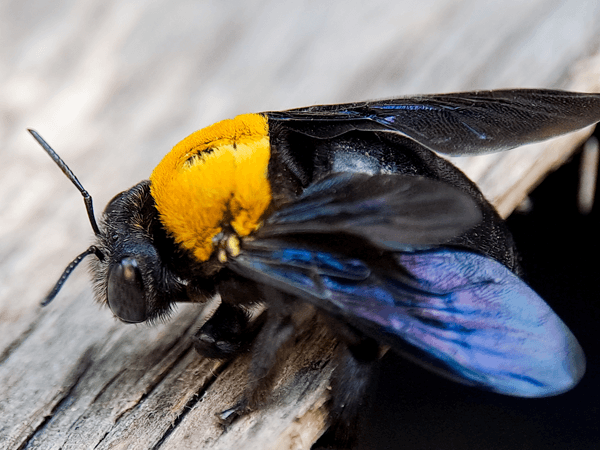
Physical Features
- Size: About 1 inch long, similar to a bumble bee
- Color: Yellow-and-black thorax with a solid black abdomen
- Abdomen: Shiny and hairless (the key identifier)
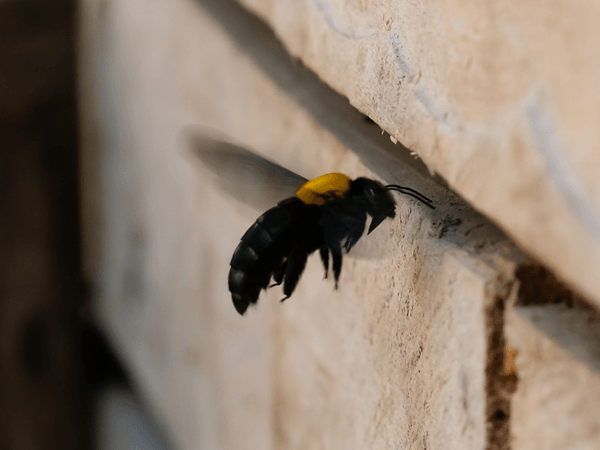
- Behavior near nest: Males hover aggressively but cannot sting. Females rarely sting but can.
- The dead giveaway: Perfectly round half-inch holes in wood, often with a small pile of sawdust beneath
After heavy rain, colonies often relocate. You may notice a yard with no visible mounds suddenly develop several within 24 to 48 hours of a storm.
The Hole Tells You Everything
Even if you don’t see the bee itself, the hole is unmistakable. Carpenter bee entry holes are:
- Perfectly round (not oval, ragged, or irregular)
- About 1/2 inch in diameter (the size of a finger nail)
- Often have a small pile of sawdust (called "frass") directly below the entrance
- Sometimes show a yellow or brown stain on the wood below the hole (carpenter bee waste)
- Usually drilled on the underside of horizontal wood surfaces or the lower edge of vertical surfaces
Once you know what to look for, you’ll spot them everywhere a property has wood eaves or railings.
Carpenter Bee vs. Bumble Bee {#vs-bumble}
These two species look almost identical at a glance, and people confuse them constantly. The differences matter, because the treatment, behavior, and concern level are very different.
| Feature | Carpenter Bee | Bumble Bee |
|---|---|---|
| Size | About 1 inch | About 1 inch |
| Abdomen | Shiny, hairless, solid black | Fuzzy, yellow-and-black bands |
| Body fuzz | Only on thorax, not abdomen | Covers entire body |
| Where they nest | Bore tunnels into wood | Ground burrows or cavities |
| Wood damage | Yes, significant over time | No |
| Behavior near home | Males hover aggressively at eaves | Generally calm, not territorial |
| Sting risk | Females can but rarely do | Females can, usually only when threatened |
| Pollinator value | Yes, but compete with native bees | Critical native pollinator |
If the bee is fuzzy all over, it’s a bumble bee and it shouldn’t be treated unless it’s nesting somewhere dangerous. If the bee has a shiny black abdomen and there are round holes in wood nearby, it’s a carpenter bee and it needs to be addressed.
The Damage Carpenter Bees Cause {#damage}
A single carpenter bee hole isn’t a structural problem. The damage accumulates, and it accumulates faster than most homeowners expect.
Year One: Initial Damage
A female carpenter bee bores a 1/2-inch entry hole, then tunnels horizontally inside the wood for 4 to 6 inches. She creates small cells along the tunnel, lays an egg in each, and provisions each cell with pollen and nectar before sealing it.
By the end of the first season, you might have:
- 1 to 6 entry holes in a single piece of wood
- 4 to 8 inches of internal tunneling per hole
- Yellow staining on the wood below entry points
- Sawdust piles on surfaces below the nest
Year Two and Beyond: The Real Damage
Here’s where it gets serious. Carpenter bees:
- Return to the same wood every year, often using existing holes as starting points
- Extend existing tunnels rather than starting new ones (a 4-inch tunnel can become 12 inches over several years)
- Attract other carpenter bees, who find existing damage signals "this is good wood for nesting"
- Create branching galleries off the original tunnel, multiplying the internal damage
A piece of fascia that started with 2 holes can have 20 internal feet of tunneling after 5 untreated seasons.
The Woodpecker Problem
Carpenter bee larvae are a high-protein food source. Woodpeckers know this, and they tear into damaged wood to eat them. The woodpecker damage is often worse than the carpenter bee damage that caused it.
If you’re seeing fresh woodpecker damage on eaves, fascia, or trim, there’s almost always a carpenter bee infestation feeding it. Treating the carpenter bees stops the woodpeckers from coming back.
Where Carpenter Bees Strike
Carpenter bees prefer specific kinds of wood and locations:
- Untreated or weathered softwoods (cedar, pine, redwood, cypress)
- Eaves, fascia, and soffits
- Deck railings, posts, and beams
- Wood siding (especially horizontal lap siding)
- Outbuildings, sheds, pergolas, and gazebos
- Old play structures and wooden swing sets
- Wood fencing (especially the top rails)
- Bare wood is hit much more often than painted wood
Why Store-Bought Treatments Fail
Almost every homeowner has tried at least one of these:
- Granular mound treatments: Kill visible workers but rarely reach the queen
- Liquid drenches: Effective on the mound treated, but neighboring colonies move in
- DIY home remedies (boiling water, gasoline, dish soap): Dangerous, ineffective, and often illegal
- One-time professional spray: Kills surface ants without breaking the colony
The fundamental problem is the queen. She can live up to seven years and is buried deep in the mound. If she survives, the colony rebuilds. If she dies but neighboring colonies are intact, new mounds appear within weeks.
How Healthy Home Treats Carpenter Bees {#treatment}
Carpenter bee treatment is a four-step process that targets active bees, prevents new tunneling, and sets up long-term prevention.
The Treatment Process
- Property inspection. Identify all areas with active carpenter bee activity and document wood surfaces at risk.
- Direct hole treatment. Insecticide applied directly into existing holes to kill the female, eggs, and larvae inside.
- Residual surface treatment. Long-lasting product applied to susceptible wood surfaces to deter new tunneling for the rest of the season.
- Sealing recommendations. Once activity has stopped (usually within 1 to 2 weeks of treatment), holes should be plugged with wood putty or caulk to prevent reuse. Some homeowners do this themselves; others request guidance on which holes to seal first.
Coverage Under Healthy Home Protection Plans
Carpenter bees are covered under all four annual protection plans. Treatment is performed during regular quarterly visits, with spring being the most important treatment window.
Plan | Annual Price | Carpenter Bee Coverage |
Essential | $540 | ✓ Included |
Home + Yard | $935 | ✓ Included |
Home + Mosquito | $1,250 | ✓ Included |
Ultimate | $1,545 | ✓ Included |
Covered Under:
- Home + Yard Protection ($935/year)
- Home + Mosquito Protection ($1,250/year)
- Ultimate Protection Plan ($1,545/year)
- Essential Home Protection (does not include yard treatment)
If fire ants are your primary concern and you don’t currently have a plan, the Home + Yard tier is the entry point. If you’re also dealing with mosquitoes (also a coastal NC summer problem), Home + Mosquito bundles both for less than buying them separately.
Spring Is Critical
Carpenter bees overwinter inside old tunnels and emerge in April and May to mate and start the next generation. Treating before or during emergence stops them from establishing new tunnels for the entire year. Treatment after they’ve already started boring is still effective, but it’s reactive rather than preventive.
Homeowners on an annual protection plan are automatically covered for spring carpenter bee treatment as part of the quarterly visit cycle.
Frequently Asked Questions About Carpenter Bees
Carpenter bees have a shiny, hairless black abdomen. Bumble bees have a fuzzy yellow-and-black abdomen. Carpenter bees bore perfectly round half-inch holes into wood eaves, decks, and railings. Bumble bees nest in the ground or in cavities and do not damage wood. If you see bees flying around your eaves and there are round holes in the wood, it’s carpenter bees.
The males that hover aggressively around nest sites can’t sting at all. They’re all bluff. Females can sting but almost never do unless physically handled. Carpenter bees are not aggressive defenders the way wasps or hornets are. The bigger danger from a carpenter bee infestation is the structural damage they cause to wood, not the risk of being stung.
Effective carpenter bee treatment involves direct treatment of existing holes, residual treatment on susceptible wood surfaces, and sealing old holes after treatment to prevent reuse. Healthy Home Pest Control includes carpenter bee coverage in all four annual protection plans starting at $540 per year. Spring treatment is most important because carpenter bees emerge in April and May.
Yes, but only after treatment. Plugging untreated holes traps active bees and larvae inside, and the next generation will just bore out next to them. Treat first, wait for activity to stop, then seal the holes with wood putty or caulk. Sealing is an important step because carpenter bees return to the same wood year after year if old holes remain accessible.
Woodpeckers go after carpenter bee larvae. If you’re seeing fresh woodpecker damage on wood eaves or fascia boards, you almost certainly have a carpenter bee problem feeding it. The woodpecker damage is often much more visible (and more destructive) than the original carpenter bee holes. Treating the carpenter bees addresses the root cause of the woodpecker activity.
Yes. Painted wood is significantly less attractive to carpenter bees than bare, weathered, or stained wood. Painting after treatment is a good long-term defense for eaves, fascia, decks, and railings. The protection isn’t absolute, but the deterrent effect is real. Pressure-treated wood and hardwoods are also less attractive than untreated softwoods like cedar, pine, and redwood.
A single carpenter bee hole is not a structural problem. The damage accumulates over time. Carpenter bees return to the same wood year after year, expand existing tunnels, and attract other carpenter bees to nearby wood. Combined with woodpecker damage going after the larvae, several seasons of untreated activity can cause real damage to fascia, soffits, decks, and outbuildings, requiring board replacement that runs hundreds to thousands of dollars.
Spring, specifically April and May in coastal North Carolina. Carpenter bees emerge from overwintering, mate, and start boring new holes during this window. Treatment in early spring stops them before they establish new tunnels, which prevents damage for the rest of the year. Treatment is still effective later in the season, but spring timing produces the best results.